Can a CA Improve Working Capital Management: Strategies for Business Liquidity
Learn how a Chartered Accountant improves working capital management through cash flow planning, inventory control, receivable management, budgeting, and financial advisory.
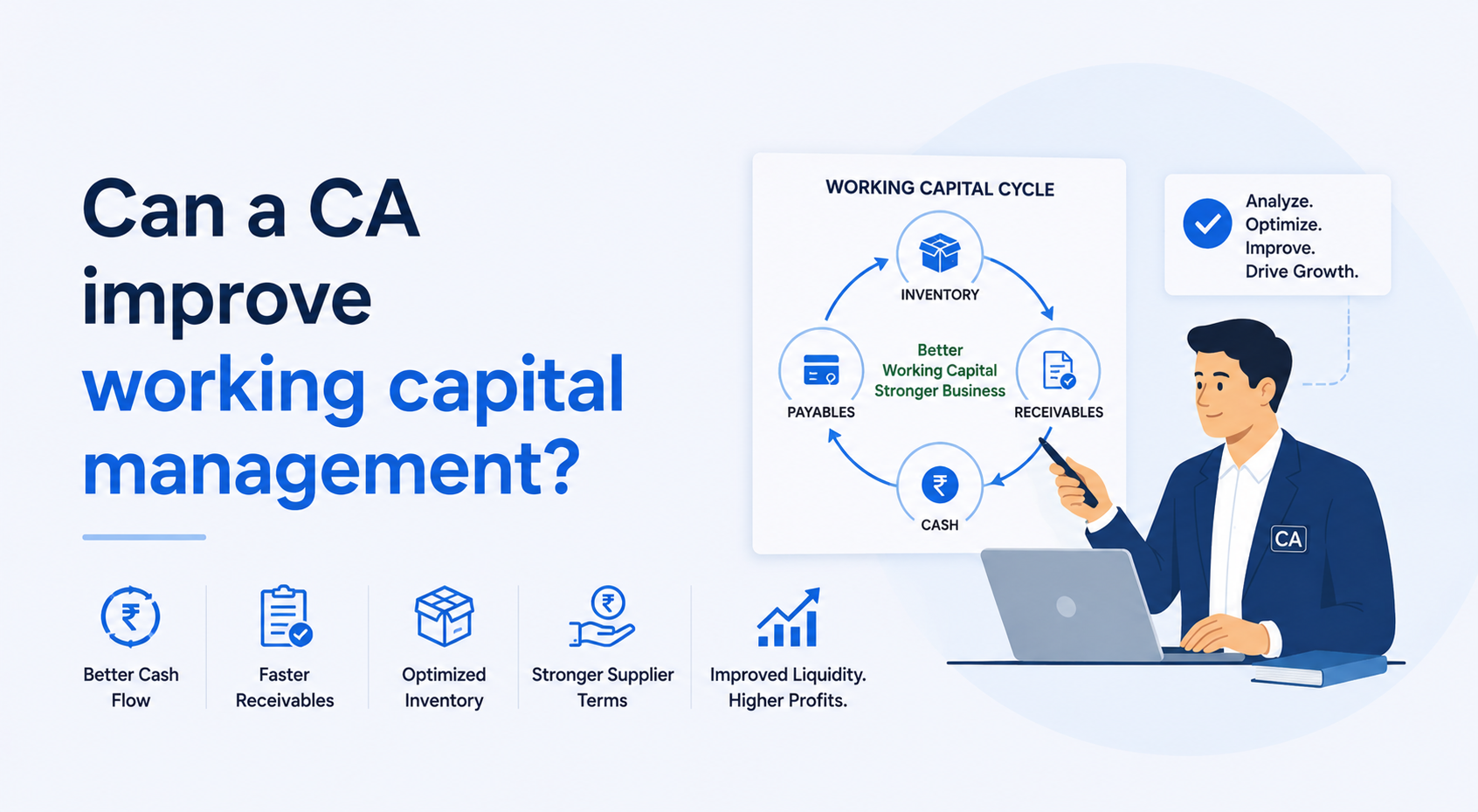
Table of Content
- Why Working Capital Management Matters
- Can a CA Improve Working Capital Management?
- Cash Flow Analysis Strengthens Liquidity
- Receivables Management Improves Cash Availability
- Inventory Optimization Releases Blocked Capital
- Payable Management Improves Financial Flexibility
- Budgeting Supports Better Working Capital Control
- Financial Forecasting Helps Businesses Prepare Ahead
- Cost Optimization Improves Working Capital
- Technology Makes Working Capital Management More Efficient
- Strategic Advisory Improves Long-Term Financial Health
- Why MSMEs and Startups Need Working Capital Advisory
- The Future of Working Capital Management
- Conclusion
Working capital is the financial backbone of every business. It represents the funds available to manage day-to-day operations, purchase inventory, pay employees, settle supplier dues, and maintain smooth business activities. Even profitable businesses can face financial difficulties if they fail to manage working capital efficiently. Delayed customer payments, excessive inventory, poor expense management, and unplanned cash outflows often create liquidity challenges that restrict business growth. Therefore, effective working capital management is essential for maintaining financial stability and ensuring uninterrupted business operations.
Chartered Accountants possess the financial expertise required to analyze business operations, optimize cash flow, strengthen receivable collections, manage inventory efficiently, and improve short-term financial planning. Rather than focusing only on accounting and taxation, modern CAs work as strategic financial advisors who help businesses maintain adequate liquidity while maximizing operational efficiency. Their professional guidance enables organizations to utilize resources more effectively and build a strong financial foundation for sustainable growth.
Why Working Capital Management Matters
Working capital is the difference between a company's current assets and current liabilities. It determines whether a business has sufficient funds to meet its short-term obligations while continuing normal operations.
Poor working capital management can lead to delayed payments, increased borrowing costs, supply chain disruptions, and missed business opportunities. Strong liquidity management ensures smooth business operations and long-term financial health.
Can a CA Improve Working Capital Management?
Yes, a Chartered Accountant can significantly improve working capital management by analyzing cash flow, optimizing receivables and payables, controlling inventory, preparing financial forecasts, and implementing effective budgeting systems.
Their financial expertise helps businesses improve liquidity without compromising operational efficiency. By identifying financial bottlenecks early, Chartered Accountants support better resource utilization and sustainable business growth.
Cash Flow Analysis Strengthens Liquidity
Cash flow is one of the most important components of working capital management. Chartered Accountants analyze cash inflows and outflows to identify areas where liquidity can be improved. Cash flow analysis helps businesses:
- Maintain adequate liquidity
- Meet operational expenses
- Reduce financial stress
- Improve payment planning
- Strengthen financial stability
- Support business expansion
Better cash flow management leads to stronger working capital performance.
Receivables Management Improves Cash Availability
Delayed customer payments often create unnecessary pressure on business finances. Chartered Accountants review customer credit policies and collection procedures to improve receivable management. Effective receivable management helps businesses:
- Speed up collections
- Reduce overdue invoices
- Improve liquidity
- Minimize bad debts
- Strengthen working capital
Faster collections ensure that funds remain available for daily operations.
Inventory Optimization Releases Blocked Capital
Excess inventory ties up significant financial resources that could be used elsewhere in the business. Chartered Accountants evaluate inventory turnover and recommend strategies that maintain optimal stock levels. Inventory optimization supports:
- Better stock management
- Lower storage costs
- Improved liquidity
- Faster inventory turnover
- Reduced wastage
- Better purchasing decisions
Efficient inventory control strengthens working capital utilization.
Payable Management Improves Financial Flexibility
Managing supplier payments efficiently is another important aspect of working capital management. Chartered Accountants help businesses balance payment schedules while maintaining healthy vendor relationships. Payable management strategies include:
- Payment scheduling
- Vendor negotiations
- Cash planning
- Credit utilization
- Financial monitoring
- Working capital optimization
Proper payment planning preserves liquidity without affecting supplier confidence.
Budgeting Supports Better Working Capital Control
Financial discipline begins with proper budgeting. Chartered Accountants prepare budgets that align operational expenses with projected revenues and available financial resources. Budgeting enables organizations to:
- Control unnecessary spending
- Allocate resources efficiently
- Improve cash planning
- Monitor financial performance
- Support profitability
- Maintain liquidity
Well-planned budgets improve overall working capital efficiency.
Financial Forecasting Helps Businesses Prepare Ahead
Accurate forecasting enables businesses to anticipate future funding requirements and liquidity challenges. Chartered Accountants prepare financial projections based on historical performance and expected business conditions. Forecasting supports:
- Seasonal planning
- Investment decisions
- Borrowing requirements
- Working capital planning
- Growth strategies
- Financial stability
Predictive financial planning reduces uncertainty and improves business preparedness.
Cost Optimization Improves Working Capital
High operating costs reduce available working capital and weaken financial performance. Chartered Accountants identify unnecessary expenses and recommend cost optimization strategies that improve efficiency. Cost management may include:
- Expense monitoring
- Budget reviews
- Process improvement
- Vendor cost analysis
- Resource optimization
- Operational efficiency
Reducing avoidable costs frees additional cash for business operations.
Technology Makes Working Capital Management More Efficient
Digital technology has transformed financial management and liquidity monitoring. Chartered Accountants use advanced accounting software and business analytics tools that provide real-time financial insights. Technology-driven solutions include:
- Cloud accounting
- Financial dashboards
- Automated reporting
- Business analytics
- ERP systems
- Cash flow monitoring tools
Technology enables faster financial decisions and better liquidity management.
Strategic Advisory Improves Long-Term Financial Health
Working capital management is not only about short-term liquidity but also about long-term financial sustainability. Chartered Accountants provide strategic advisory that helps businesses improve operational efficiency and financial planning. Strategic advisory may include:
- Working capital restructuring
- Financial diagnostics
- Growth planning
- Investment analysis
- Business restructuring
- Resource allocation
Professional advisory strengthens financial resilience and long-term profitability.
Why MSMEs and Startups Need Working Capital Advisory
Small businesses often experience working capital shortages due to limited financial resources and inconsistent cash inflows. Chartered Accountants help startups and MSMEs establish proper financial systems, improve collections, optimize expenses, and strengthen liquidity management.
Professional financial guidance enables smaller businesses to manage growth while maintaining financial discipline. Healthy working capital becomes a competitive advantage for expanding businesses.
The Future of Working Capital Management
Modern financial management is increasingly driven by automation, artificial intelligence, and real-time business analytics. Chartered Accountants are adopting technology-enabled advisory models that provide continuous liquidity monitoring and predictive financial insights.
The future of working capital management will focus on proactive planning, digital reporting, and data-driven financial decisions that improve business efficiency and profitability. Technology will continue to enhance the strategic role of Chartered Accountants in business finance.
Conclusion
The answer to Can a CA improve working capital management is undoubtedly yes. Chartered Accountants help businesses strengthen liquidity through effective cash flow planning, receivable management, inventory optimization, budgeting, forecasting, cost control, and strategic financial advisory. Their expertise enables organizations to manage short-term financial obligations efficiently while creating a stable foundation for long-term growth. In today's competitive business environment, working capital management has become a key driver of financial success, and Chartered Accountants play a vital role in helping businesses maintain strong liquidity and sustainable profitability.

FAQs
Can a CA improve working capital management?
Yes. Chartered Accountants improve working capital management through cash flow planning, receivable management, inventory optimization, budgeting, forecasting, and financial advisory.
Why is working capital management important?
Working capital management ensures businesses have sufficient liquidity to meet operational expenses, manage short-term liabilities, and support business growth.
How do Chartered Accountants improve cash flow?
They analyze cash inflows and outflows, strengthen receivable collections, optimize expenses, and improve financial planning to maintain healthy liquidity.
Can inventory management improve working capital?
Yes. Efficient inventory management reduces blocked capital, lowers storage costs, improves stock turnover, and strengthens liquidity.
How does receivable management support working capital?
Faster customer collections improve cash availability, reduce overdue payments, minimize bad debts, and strengthen working capital efficiency.
Does budgeting improve working capital management?
Absolutely. Budgeting controls expenses, improves financial planning, allocates resources effectively, and supports better liquidity management.
Can technology help manage working capital?
Yes. Cloud accounting, ERP systems, financial dashboards, automation, and business analytics improve monitoring and decision-making.
Why do startups need working capital advisory?
Startups benefit from better budgeting, liquidity planning, receivable management, expense control, and financial forecasting that support sustainable growth.
How does financial forecasting improve working capital?
Forecasting helps businesses anticipate funding needs, manage seasonal fluctuations, plan investments, and avoid future liquidity shortages.
What is the biggest benefit of hiring a Chartered Accountant for working capital management?
The biggest benefit is professional financial guidance that improves liquidity, optimizes cash flow, strengthens resource utilization, and supports long-term business stability and profitability.