Why Chartered Accountants Are Trusted Business Advisors for Companies
Learn why chartered accountants are trusted business advisors through financial expertise, strategic planning, compliance management, and risk analysis support.
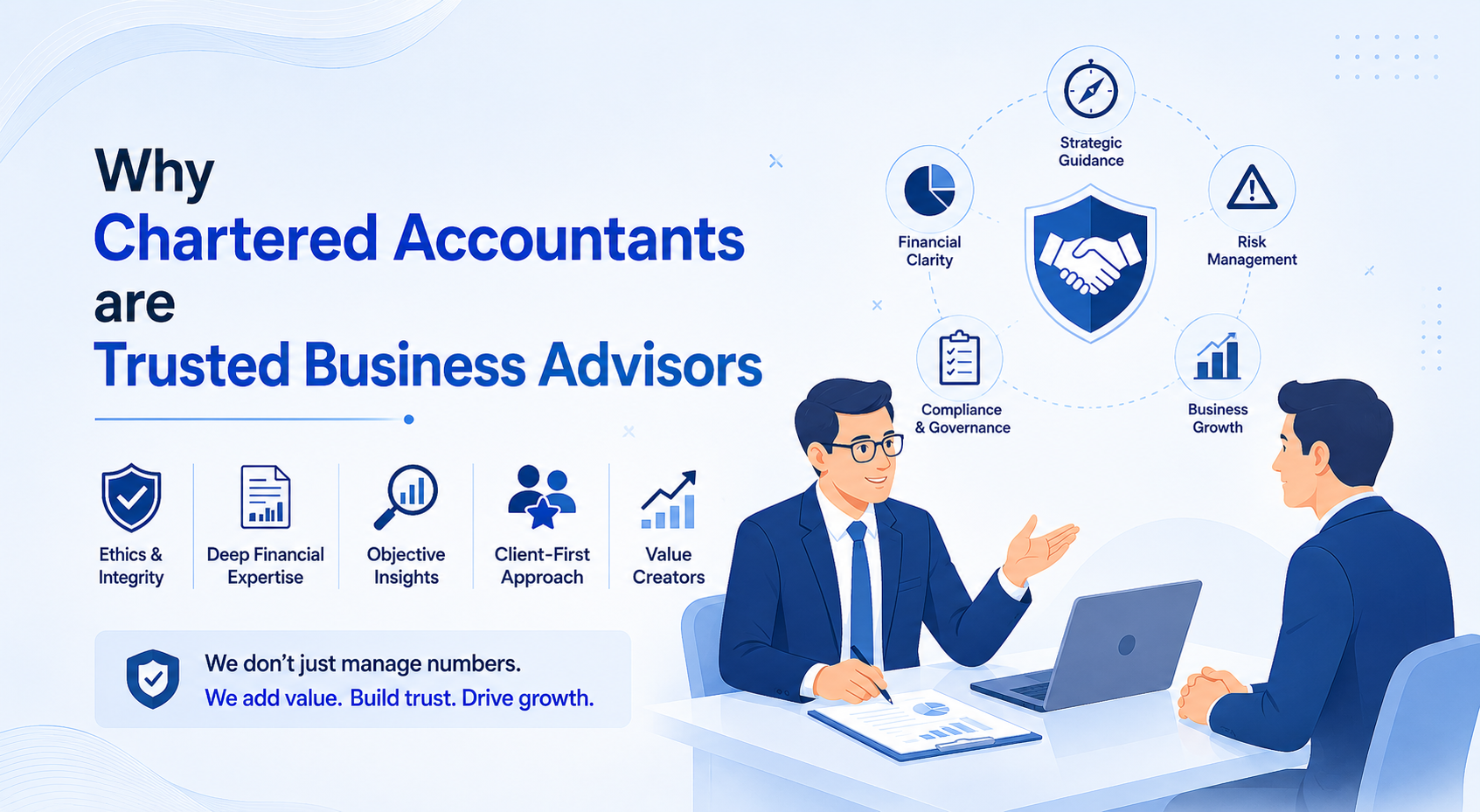
Table of Content
- Chartered Accountants Have Strong Financial Expertise
- Businesses Depend on CAs for Strategic Decision-Making
- Professional Ethics Build Long-Term Trust
- Chartered Accountants Help Businesses Manage Risks
- Compliance Management Increases Professional Importance
- Businesses Value Practical Financial Guidance
- Technology has expanded the advisory role of CAs
- Chartered Accountants Improve Investor Confidence
- Communication Skills Make CAs Better Advisors
- Chartered Accountants Support Businesses During Crises
- Continuous Learning Keeps Chartered Accountants Relevant
- Conclusion
In modern business environments, companies require much more than basic accounting and taxation support. Businesses today face financial uncertainty, compliance pressure, market competition, operational challenges, and rapid technological changes. Because of this, organizations increasingly depend on professionals who can provide practical financial guidance and strategic business support. This is one of the biggest reasons why chartered accountants are trusted business advisors across industries.
Chartered accountants are trusted not only because of their technical finance knowledge but also because of their analytical thinking, professional discipline, and understanding of business operations. They help companies make informed decisions, manage risks, maintain compliance, and improve financial stability. Over time, the role of chartered accountants has evolved from traditional accounting work toward broader advisory and leadership responsibilities in businesses.
Chartered Accountants Have Strong Financial Expertise
One major reason why chartered accountants are trusted business advisors is their deep understanding of financial systems and business operations. The CA profession involves extensive training in areas such as accounting, taxation, auditing, compliance, and financial management. This knowledge helps professionals analyze:
- Business profitability
- Cash flow management
- Financial risks
- Investment decisions
- Operational efficiency
Businesses trust chartered accountants because financial decisions directly affect long-term growth and stability. Professional financial guidance, therefore, becomes extremely valuable for management teams.
Businesses Depend on CAs for Strategic Decision-Making
Modern companies increasingly involve chartered accountants in important business planning and strategic discussions. Their financial understanding helps organizations make more practical and financially balanced decisions.
- Expansion Planning: Businesses require financial analysis before entering new markets or launching expansion projects.
- Investment Evaluation: Chartered accountants help evaluate risks, expected returns, and long-term financial sustainability.
- Cost Management: Professionals identify areas where businesses can improve efficiency and reduce unnecessary expenses.
- Profitability Improvement: Companies depend on financial experts to analyze business performance and identify growth opportunities.
Because of this strategic involvement, chartered accountants are now considered important business advisors instead of only finance professionals.
Professional Ethics Build Long-Term Trust
Trust is one of the most important qualities in the CA profession. Chartered accountants regularly handle sensitive financial information and important compliance responsibilities, so businesses expect strong ethical behavior from them. Professional ethics help businesses maintain:
- Financial transparency
- Honest reporting practices
- Confidentiality protection
- Compliance discipline
This ethical responsibility is one of the strongest reasons why chartered accountants are trusted business advisors in modern industries. Businesses often depend on professionals who can provide honest financial guidance even during difficult situations.
Chartered Accountants Help Businesses Manage Risks
Every business decision involves financial and operational risks. Companies, therefore, depend heavily on finance professionals to identify possible challenges before implementing major plans. Chartered accountants support businesses through:
- Risk analysis
- Compliance monitoring
- Financial forecasting
- Internal control evaluation
Their ability to identify risks early helps businesses avoid financial instability and operational problems. This practical guidance improves long-term business confidence and decision-making quality.
Compliance Management Increases Professional Importance
Modern businesses operate under strict taxation and regulatory systems. Even small compliance mistakes can create financial penalties and legal complications. Chartered accountants help organizations manage:
- Taxation Responsibilities: Professionals ensure businesses properly follow GST, income tax, and other compliance requirements.
- Financial Reporting Standards: Accurate reporting improves transparency and investor confidence.
- Regulatory Filings: Timely filings reduce legal and operational risks.
- Documentation Systems: Well-maintained records improve financial discipline and accountability.
This compliance expertise further strengthens why chartered accountants are trusted business advisors.
Businesses Value Practical Financial Guidance
One reason businesses prefer chartered accountants as advisors is that they combine technical knowledge with practical understanding. Instead of giving only theoretical suggestions, they usually provide realistic financial solutions based on actual business conditions. Modern CAs help businesses in areas such as:
- Budget planning
- Cash flow management
- Business restructuring
- Operational efficiency
Their guidance often helps companies maintain stability during both growth periods and financial challenges.
Technology has expanded the advisory role of CAs
Technology has transformed the finance industry significantly. Automated accounting systems and digital compliance tools now handle many repetitive financial tasks. Because of this shift, chartered accountants increasingly focus on:
- Business analysis
- Strategic planning
- Financial interpretation
- Advisory services
Modern professionals now work with:
- Financial analytics tools
- Cloud accounting systems
- ERP platforms
- Automated reporting software
Technology has therefore expanded the advisory and analytical role of chartered accountants in businesses.
Chartered Accountants Improve Investor Confidence
Investors and financial institutions generally prefer businesses with strong financial management and professional supervision. Chartered accountants help companies maintain:
- Accurate financial reporting
- Compliance discipline
- Financial transparency
- Risk management systems
This improves investor trust and strengthens business credibility in competitive markets. Businesses with professional financial guidance often appear more stable and reliable to stakeholders.
Communication Skills Make CAs Better Advisors
Modern chartered accountants regularly interact with:
- Business owners
- Investors
- Management teams
- Regulatory authorities
Because of this, communication skills have become highly important in the profession. Professionals must explain:
- Financial Risks: Management needs a clear understanding of possible financial challenges.
- Business Opportunities: CAs help organizations evaluate practical growth possibilities.
- Compliance Responsibilities: Businesses depend on professionals for proper regulatory understanding.
- Financial Performance: Clear reporting improves decision-making and operational planning.
Strong communication ability helps chartered accountants build long-term professional trust with clients and organizations.
Chartered Accountants Support Businesses During Crises
During financial uncertainty or economic slowdown, businesses often rely heavily on chartered accountants for practical financial guidance.
Professionals help organizations by:
- Managing cash flow
- Reducing financial risks
- Controlling operational costs
- Improving recovery planning
Their ability to remain analytical and financially disciplined during difficult situations further strengthens their role as trusted business advisors.
Continuous Learning Keeps Chartered Accountants Relevant
Business environments continue changing because of technology, globalization, and evolving regulations. Chartered accountants regularly update themselves regarding:
- Taxation laws
- Digital finance systems
- Compliance frameworks
- Business trends
This habit of continuous learning helps professionals remain reliable and professionally valuable in modern industries.
Conclusion
Understanding why chartered accountants are trusted business advisors helps explain the growing importance of the CA profession in modern business environments. Chartered accountants support organizations through financial planning, strategic decision-making, compliance management, risk analysis, and operational guidance. Their technical expertise, ethical discipline, analytical thinking, and practical business understanding help businesses maintain stability and achieve long-term growth. As industries become more competitive and financially complex, the advisory role of chartered accountants will continue to become even more valuable in the future.

FAQs
Why are chartered accountants trusted business advisors?
Chartered accountants are trusted because of their financial expertise, ethical standards, analytical thinking, and business understanding.
How do chartered accountants help businesses make decisions?
They provide financial analysis, risk evaluation, budgeting support, and strategic business guidance.
Why is ethical behavior important for chartered accountants?
Businesses trust professionals who maintain honesty, confidentiality, transparency, and compliance discipline.
How do chartered accountants support business growth?
They help with financial planning, expansion strategies, profitability analysis, and operational efficiency improvements.
Why are compliance skills important for CAs?
Businesses require support for taxation, reporting standards, legal filings, and financial regulations.
How do chartered accountants help manage business risks?
They analyze financial risks, monitor compliance, and evaluate operational weaknesses before problems become severe.
How has technology changed the role of chartered accountants?
Technology has reduced repetitive work and increased focus on analytics, strategic planning, and advisory services.
Why do investors trust businesses managed by chartered accountants?
Professional financial supervision improves transparency, reporting reliability, and business credibility.
Why are communication skills important for chartered accountants?
CAs regularly explain financial information and business risks to management teams, clients, and investors.
How do chartered accountants help businesses during financial crises?
They support cash flow management, cost control, financial planning, and business recovery strategies.