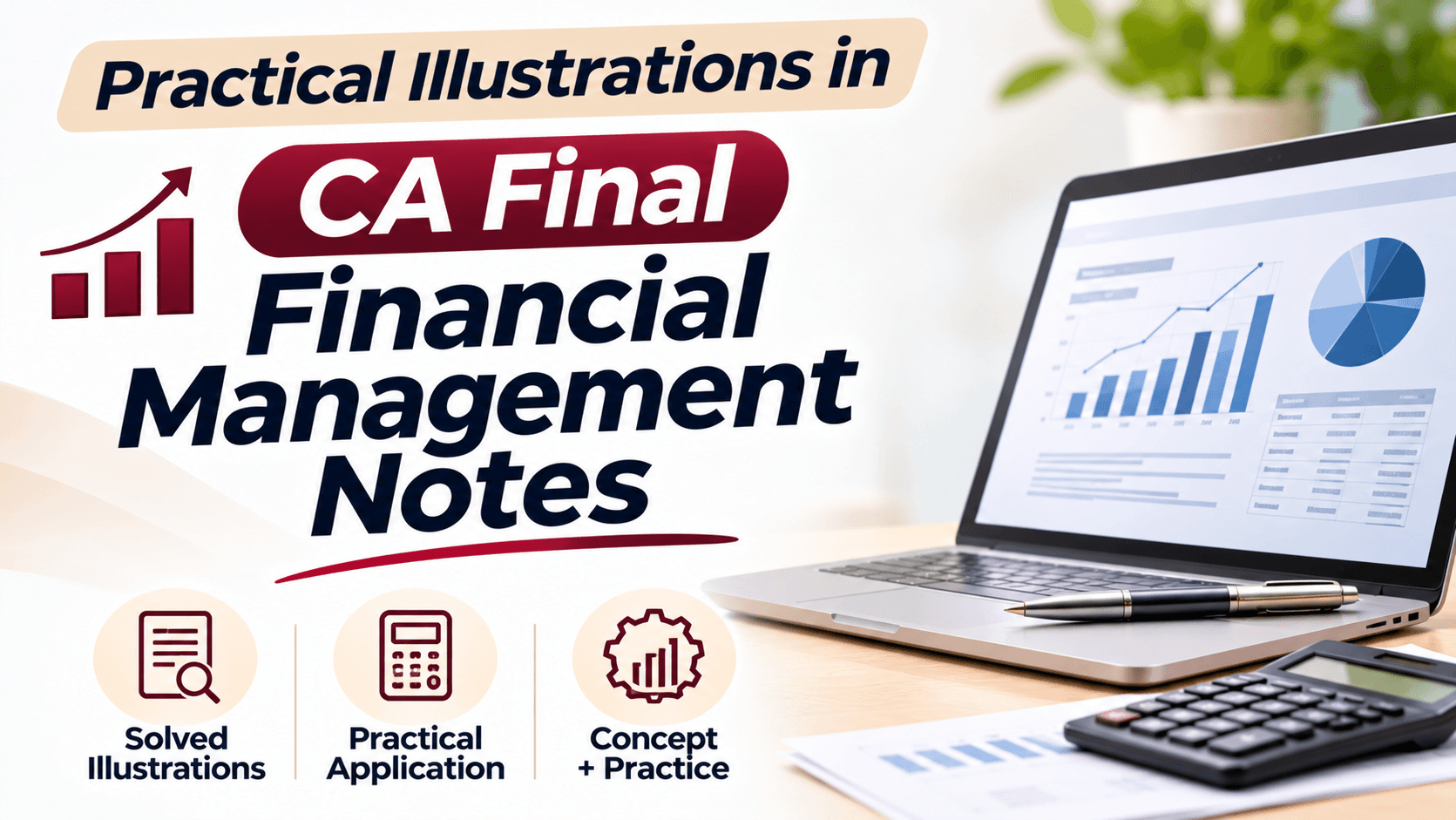
Practical Illustrations in CA Final Financial Management Notes
Explore practical illustrations in ca final financial management notes with practical study methods, revision tips, topic planning, question practice and exam-focused…
In this article(11 sections)ShowHide
Practical Illustrations in CA Final Financial Management Notes is a practical study resource when it is built around the syllabus applicable to your examination attempt. Students often collect many pages of material but struggle to identify what to revise, how to practise and which errors need attention. A useful set of notes should make preparation clearer rather than simply shorter.
This guide explains how to organise the topic, strengthen understanding, revise systematically and use examination-style practice. The approach is designed for CA aspirants who want reliable notes, clear examples and a manageable preparation routine, with Studycaller included as a supplementary practice resource.
Identify the correct subject and syllabus
Students often use the broad phrase 'financial management' for advanced finance topics. At CA Final level, check the current ICAI paper title and syllabus applicable to your attempt, including Strategic Financial Management where relevant. Do not assume that a chapter list from another scheme is current.
Organise your notes according to the official material for your attempt. Mark the concepts that require calculations, interpretation and decision-making. This ensures that illustrations support the right examination scope.
Why practical illustrations matter
Advanced finance concepts become clearer when a student can connect a formula with a business decision. A worked illustration shows not only the calculation but also the assumptions, sequence and interpretation of the result.
After reading a solution, ask why that method was selected and what the result means. A correct number without understanding can be difficult to reproduce when the question changes.
Build a formula and decision map
Create a compact sheet linking each formula or method to its purpose, inputs and conditions. Where two methods appear similar, note when each is appropriate. Keep units, signs and time periods clear.
Do not memorise a formula in isolation. Add a one-line explanation and a small example. Check every formula against the prescribed study material and avoid using a shortcut that changes the meaning of the result.
| Study component | What to record | How to check progress |
|---|---|---|
| Core concept | Meaning, conditions and exceptions | Explain without notes |
| Application | Worked example or short case | Solve a fresh question |
| Revision | Summary and weak points | Recall after a gap |
| Practice | Timed question and errors | Review corrections |
Practise investment and valuation illustrations
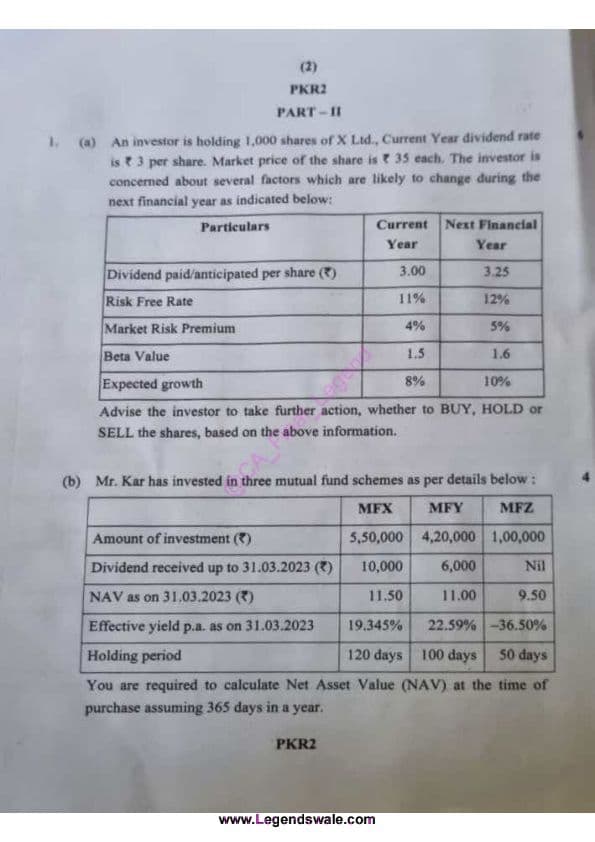
Where included in your syllabus, investment and valuation questions require careful identification of cash flows, timing, risk assumptions and the appropriate evaluation method. Start with a clearly labelled timeline or working table.
Explain the financial meaning of the output rather than stopping at the calculation. When a question changes an assumption, identify which part of the method must change and why.
Use portfolio and risk examples
Risk-related topics can involve relationships between expected outcomes, variability and financial decisions, depending on the applicable syllabus. Use simple numerical illustrations first, then move to integrated questions.
Keep a record of common mistakes such as inconsistent units, incorrect signs or misunderstanding the interpretation. The error log is often more useful for revision than another copied solution.
Revise derivatives and financial instruments carefully
Where prescribed, derivatives and financial instruments should be studied through their economic purpose, payoff or cash-flow logic and relevant calculation methods. Begin with a simple transaction before attempting a complex scenario.
Draw a short timeline or payoff sketch when helpful. Explain what risk is being managed and what the result represents. Verify the exact conventions and methods in the current study material.
Include foreign exchange and financing scenarios
Advanced finance questions may require students to compare alternatives, evaluate exposures or analyse financing choices. Separate the facts, assumptions, method and conclusion in your notes.
When solving, write down the direction of cash flows and the relevant dates before substituting figures. This prevents avoidable errors and makes the solution easier to review.
Sample Four-Week Study and Revision Plan
| Week | Main task | Checkpoint |
|---|---|---|
| 1 | Review syllabus and learn core concepts | Short topic quiz |
| 2 | Complete notes and practise examples | Chapter questions |
| 3 | Revise weak areas and mix topics | Timed practice |
| 4 | Review mistakes and attempt a test | Performance analysis |
Turn worked examples into independent practice
First study a solved illustration, then cover the solution and attempt it independently. Next, change one assumption or input and explain whether the method or conclusion changes. This is more effective than repeatedly reading the same answer.
Keep separate lists of conceptual errors, formula errors, arithmetic slips and interpretation mistakes. Each category needs a different correction method.
Present financial solutions clearly in examinations
Show the relevant formula, inputs, workings, assumptions and final conclusion. Label tables and use consistent units. If the question asks for advice or comparison, add a brief interpretation of the numerical result.
Allocate time according to marks and practise completing calculations under examination conditions. Avoid excessive explanation where a concise working is sufficient, but do not omit the reasoning behind a decision.
How Studycaller can support practical finance preparation
A practical finance routine combines official study material, worked illustrations, independent problem-solving and timed tests. Review mistakes and revise the concepts that caused them rather than only repeating the final arithmetic.
Studycaller can support structured practice and performance review. Use mock test results to choose which illustrations to revisit, and verify the current CA Final paper title, scope and methods through ICAI resources.
CA Final Financial management notes
Free notes from the Studycaller library, picked for this article.
 Past papers
CA Final · Advanced Financial Management
🔠 CA Final || Advanced Financial Management AFM | Question Paper of May24 Exam 💥
SurbhiLikes 5Views 6.8k Charts
CA Final · Advanced Financial Management
Advanced Financial management last mile referencer
ParthLikes 2Views 10.3k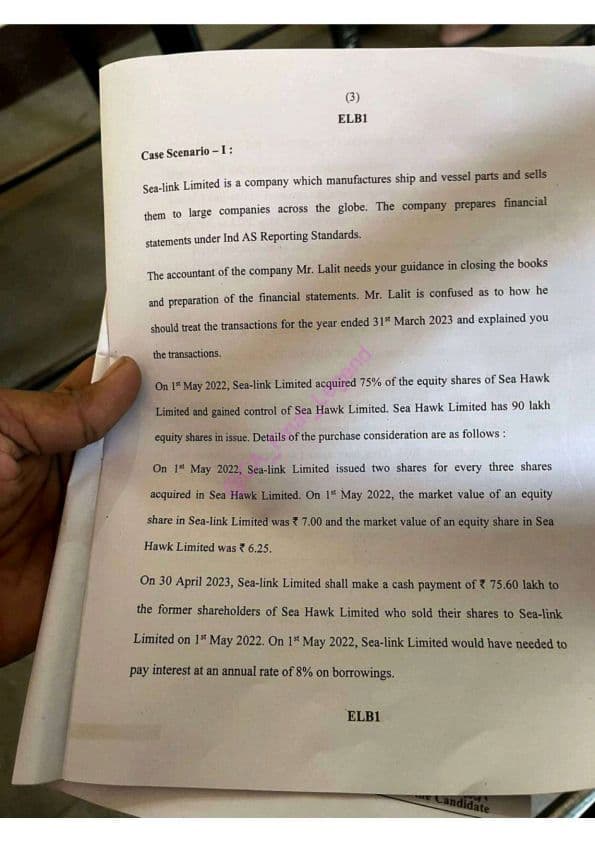 Past papers
CA Final · Financial Reporting
🔠 CA Final || Financial Reporting FR | Question Paper along with MCQs | of May 24 Exam 💥
SurbhiLikes 10Views 7k Questions
CA Final · Financial Reporting
CA Final Financial Reporting Last Day Revision (LDR) Questions Index
PareekLikes 4Views 18.1k
Frequently asked questions
What is meant by CA Final Financial Management notes?
Students often use the broad phrase 'financial management' for advanced finance topics. Organise your notes according to the official material for your attempt. Use the official ICAI material relevant to your attempt and check your understanding with short questions or timed practice.
Why are practical illustrations important?
Advanced finance concepts become clearer when a student can connect a formula with a business decision. After reading a solution, ask why that method was selected and what the result means. Use the official ICAI material relevant to your attempt and check your understanding with short questions or timed practice.
How should I organise finance formulas?
Create a compact sheet linking each formula or method to its purpose, inputs and conditions. Do not memorise a formula in isolation. Use the official ICAI material relevant to your attempt and check your understanding with short questions or timed practice.
Should I memorise solved examples?
Where included in your syllabus, investment and valuation questions require careful identification of cash flows, timing, risk assumptions and the appropriate evaluation method. Explain the financial meaning of the output rather than stopping at the calculation. Use the official ICAI material relevant to your attempt and check your understanding with short questions or timed practice.
How can I improve numerical accuracy?
Risk-related topics can involve relationships between expected outcomes, variability and financial decisions, depending on the applicable syllabus. Keep a record of common mistakes such as inconsistent units, incorrect signs or misunderstanding the interpretation. Use the official ICAI material relevant to your attempt and check your understanding with short questions or timed practice.
Are interpretation and conclusions important?
Where prescribed, derivatives and financial instruments should be studied through their economic purpose, payoff or cash-flow logic and relevant calculation methods. Draw a short timeline or payoff sketch when helpful. Use the official ICAI material relevant to your attempt and check your understanding with short questions or timed practice.
How should I practise risk-related questions?
Advanced finance questions may require students to compare alternatives, evaluate exposures or analyse financing choices. When solving, write down the direction of cash flows and the relevant dates before substituting figures. Use the official ICAI material relevant to your attempt and check your understanding with short questions or timed practice.
How can I revise financial instruments?
First study a solved illustration, then cover the solution and attempt it independently. Keep separate lists of conceptual errors, formula errors, arithmetic slips and interpretation mistakes. Use the official ICAI material relevant to your attempt and check your understanding with short questions or timed practice.
What should I check before using older notes?
Show the relevant formula, inputs, workings, assumptions and final conclusion. Allocate time according to marks and practise completing calculations under examination conditions. Use the official ICAI material relevant to your attempt and check your understanding with short questions or timed practice.
How can Studycaller help with finance practice?
A practical finance routine combines official study material, worked illustrations, independent problem-solving and timed tests. Studycaller can support structured practice and performance review. Use the official ICAI material relevant to your attempt and check your understanding with short questions or timed practice.