PDF · Detailed Notes
JK Shah CA Inter Audit Notes: Summarised Auditing and Ethics Notes
- Shared by
- Manan Dadhaniya
- Course
- CA Inter
- Subject
- Auditing and Ethics
- Added
- 19 Jan 2024
Part of: CA InterAuditDetailed Notes
Most read note on this topic
1 more note on this topic ↓
Continue reading in the Studycaller app
The full PDF — free to read, save and share in the app.
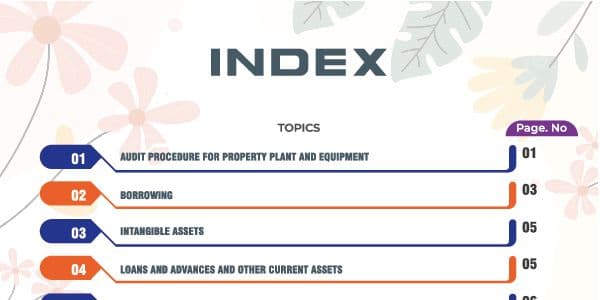
These JK Shah CA Inter audit notes are a 379-page set of summarised notes for the Auditing and Ethics paper, prepared by Prof. J. K. Shah's classes. The index lists 11 chapters, from Nature, Objective and Scope of Audit through Risk Assessment and Internal Control, Audit Evidence, Audit Report and Audit of Banks, up to Ethics and Terms of Audit Engagements. The preface says each topic covers the concepts along with selected examination questions, so the note works as both a learning text and a question bank. The first chapter opens with the origin of auditing, the meaning and nature of an audit, and the idea of auditor independence. It suits CA Inter students who find audit dry and want a structured, exam-oriented set of notes for revision.
What these JK Shah CA Inter Audit Notes cover
The notes follow the CA Inter Auditing and Ethics syllabus across 11 chapters, with page ranges given in the index. Chapter 1 covers nature, objective and scope of audit; chapter 2 audit strategy, audit planning and audit programme; chapter 3 risk assessment and internal control, one of the longest chapters; chapter 4 audit evidence, also a long chapter. These are followed by audit of items of financial statements, audit documentation, completion and review, audit report, special features of audit of different types of entities, audit of banks, and finally ethics and terms of audit engagements. The opening pages explain where the word audit comes from (the Latin 'audire', meaning to hear), the appointment of the first Auditor General in British India in 1860, the constitutional role of the Comptroller and Auditor General of India, and the setting up of ICAI under an Act of Parliament in 1949. The definition of audit as an independent examination of financial information, with notes on independence and management's responsibility, is set out in point form.
Key points to remember for the audit exam
From the opening chapter, students should be clear on a few basics that examiners return to often. An audit is an independent examination of financial information of any entity, whether profit oriented or not, and irrespective of its size or legal form, done with a view to expressing an opinion. Independence means the auditor's judgement is not subordinate to the wishes of whoever engaged him. The purpose of audit is to express an opinion on the financial statements, while preparing and presenting those statements is management's responsibility. The opinion is given through a written audit report. Beyond chapter 1, the longest chapters in the index are risk assessment and internal control, audit evidence, audit report and special features of audit of different entities, which signals where most of the content and practice questions sit. Writing answers with the correct technical terms, the right standard or concept and a clear conclusion matters more in audit than length, so learn definitions in the exact wording used in the notes.
How to revise Auditing with these notes
Use the notes chapter by chapter, matching each one against the ICAI study material so you know the source wording behind every summarised point. The index page ranges help you plan: the heavier chapters such as audit evidence, risk assessment and internal control, and audit report need more days in your timetable than audit documentation or audit strategy. After reading a chapter, attempt the examination questions included in it without looking at the answer, then compare your answer with the note to see which keywords you missed. Next, solve the latest RTPs and MTPs for the same chapter and practise past paper questions, especially case-based ones, since the preface stresses applying concepts to practical situations. In the last weeks, revise only the point-form summaries and definitions, and keep a short list of the concepts you keep getting wrong. Reading aloud short definitions, like the meaning of audit and independence, can help with retention for a theory paper.
Who should use these notes and for which paper
These notes are written for CA Inter students preparing the Auditing and Ethics paper, as the page header 'Inter CA - Audit' and the chapter list show. They suit students attending or following Prof. J. K. Shah's audit coaching, since the preface describes the material as a companion to the classes, but they can also be used on their own by anyone who wants a structured summary of the full syllabus in one place. Students who find audit theoretical and tend to leave it for the end will benefit from the simple point-form presentation and the inclusion of past-pattern questions in each chapter. Because the set runs to 379 pages, it is better used as the main reading and revision text than as a last-day sheet. Before relying on it for a particular attempt, check the chapter list and any standards against the current ICAI syllabus and study material, as the note itself does not state which attempt it applies to.
Key topics in these notes
- Nature objective and scope of audit
- Origin and meaning of auditing
- Audit strategy audit planning and audit programme
- Risk assessment and internal control
- Audit evidence
- Audit of items of financial statements
- Audit documentation
- Completion and review
- Audit report
- Special features of audit of different types of entities
- Audit of banks
- Ethics and terms of audit engagements
Explore more Auditing and Ethics notes
Related notes
- Ca inter Auditing and Ethics pdf Summary + question bank etc. For september 2025
- CA INTERMEIDATE AUDTING AND ETHICS [AUDIT] SARANSH | SUMMARY CHART NOTES FOR LAST MOMENT QUICK REVISION BY THE ICAI FOR SEPTEMBER, 2026 AND
- CA INTERMEDIATE AUDITING AND ETHICS [AUDIT] CHART NOTES | CHART BOOK BY CA RAM HARSHA | SHRESHTA ACADEMY FOR MAY, 2026 SEPTEMBER, 2026 AND J
- CA INTERMEDIATE AUDITING AND ETHICS [AUDIT] EXCEPTIONAL QUESTIONS BANK BY CA RAM HARSHA FOR SEPTEMBER, 2026
- Auditing and Ethics Question Bank By CA Test Series latest Edition ✅ If Anybody wants PW, VC Gurukul & Ekagrata classes DM me
- Auditing & Ethics Exam Trend Analysis May 2024 to May 2026
- #CA Rishabh Jain Sir's #Auditing & Ethics - Guidance for September 2026 Exam
- Audit and Ethics Concept book
More notes on this topic (1)
Comments from students
Yash Jain · 23 Jan 2024
Rahul Mehta sir ke notes hai??
Mr Ashish · 19 Jan 2024
Thank
What to study next
Frequently asked questions
What do the JK Shah CA Inter audit notes cover?
They cover 11 chapters of the CA Inter Auditing and Ethics paper, from nature, objective and scope of audit to audit of banks and ethics and terms of audit engagements. Each chapter includes concepts and selected examination questions.
How many pages are the JK Shah audit summarised notes?
The note has 379 pages, with the index giving page ranges for each of the 11 chapters.
Are these notes for CA Inter or CA Final?
They are for CA Inter; the pages are headed 'Inter CA - Audit' and the chapters follow the Auditing and Ethics paper.
Do the notes include exam questions?
Yes, the preface states that each topic includes carefully selected examination questions along with the concepts.
What is the definition of audit given in the notes?
An audit is an independent examination of financial information of any entity, whether profit oriented or not and irrespective of size or legal form, conducted with a view to expressing an opinion thereon.
Can I use these notes without attending JK Shah classes?
Yes, the summarised point-form notes can be read on their own, though it is best to use them alongside the ICAI study material, RTPs and MTPs.
How can I get the full JK Shah CA Inter audit notes PDF?
Open it free in the Studycaller app to read all 379 pages.