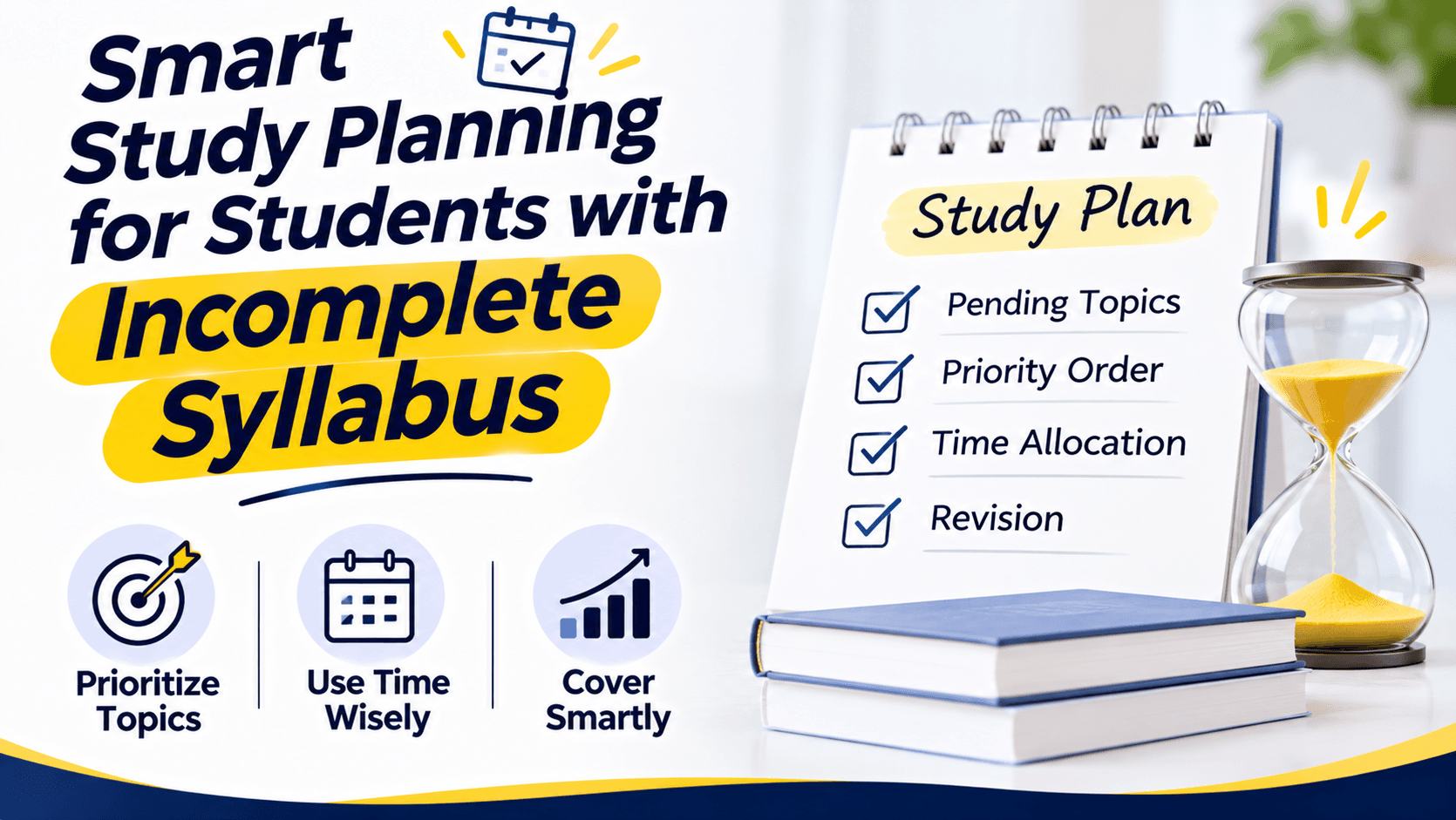
Smart Study Planning for Students with Incomplete Syllabus
Explore smart study planning for students with incomplete syllabus with practical strategies, clear study routines, revision methods, question practice and actionable…
In this article(12 sections)ShowHide
An incomplete syllabus can create pressure, especially when the examination date is approaching. Students may respond by studying longer hours, switching between chapters or trying to finish every pending topic at once. Without prioritisation, this can lead to rushed learning and little time for revision.
A smarter plan begins with an honest assessment of what is complete, partly understood and not started. Divide the remaining time into realistic blocks for coverage, revision and testing.
Assess the exact syllabus status
List chapters as not started, partly completed, studied but not revised, or revised and practised. Do not mark a chapter complete merely because you watched its lectures; check whether you can explain concepts and solve questions.
Prioritise topics clearly
Consider syllabus relevance, conceptual importance, your understanding and the time required. Address foundational topics that support other chapters. Use the official syllabus rather than relying entirely on unofficial predictions.
Break pending chapters into tasks
Divide large chapters into smaller sections, lecture targets, concept reviews and question practice. Set a clear outcome for each session and track what you can actually explain or solve.
Build daily and weekly plans
Set weekly targets first and distribute them across available days. Include fixed commitments and buffer time. Leave room for revision, doubt resolution and written practice rather than filling every hour with new chapters.
Balance coverage with revision
Do not postpone all revision until every chapter is complete. Include short reviews for completed chapters throughout the week using active recall, concise notes and selected questions.
Choose the right question practice
For a newly completed topic, begin with basic questions and move to mixed or application-based questions as understanding improves. Do not eliminate practice merely to fit in more lectures.
Handle backlogs without rebuilding everything
When a task is missed, identify why and move it to a realistic slot. If the same target is repeatedly postponed, reduce its size or change the time allocated instead of copying it forward indefinitely.
Use tests to identify priorities
Short tests show whether a chapter needs more learning or is ready for revision. Use full-length mocks when enough syllabus is covered, and interpret scores in light of topics not yet studied.
Plan the final weeks realistically
Decide what can be completed properly and what needs focused revision. Avoid starting multiple new resources or promising to finish several large chapters in one day.
How Studycaller can support structured preparation
Studycaller can complement a preparation routine through study resources, revision support and practice. Select material that matches the syllabus and addresses specific gaps in your current plan.
Quick Reference Table
| Focus area | Practical approach |
|---|---|
| Assess the exact syllabus status | List chapters as not started, partly completed, studied but not revised, or revised and practised. Do not mark a ch... |
| Prioritise topics clearly | Consider syllabus relevance, conceptual importance, your understanding and the time required. Address foundational ... |
| Break pending chapters into tasks | Divide large chapters into smaller sections, lecture targets, concept reviews and question practice. Set a clear ou... |
| Build daily and weekly plans | Set weekly targets first and distribute them across available days. Include fixed commitments and buffer time. Leav... |
| Balance coverage with revision | Do not postpone all revision until every chapter is complete. Include short reviews for completed chapters througho... |
| Choose the right question practice | For a newly completed topic, begin with basic questions and move to mixed or application-based questions as underst... |
Conclusion
Strong exam preparation comes from a clear understanding of the syllabus, regular revision and deliberate question practice. Keep your approach aligned with current official examination information, and use Studycaller as one part of a wider learning routine. Review your progress honestly, correct recurring weaknesses and make the next study session more focused than the last.
Notes students love
Free notes from the Studycaller library, picked for this article.
 Amendments
CA Foundation · Business Economics
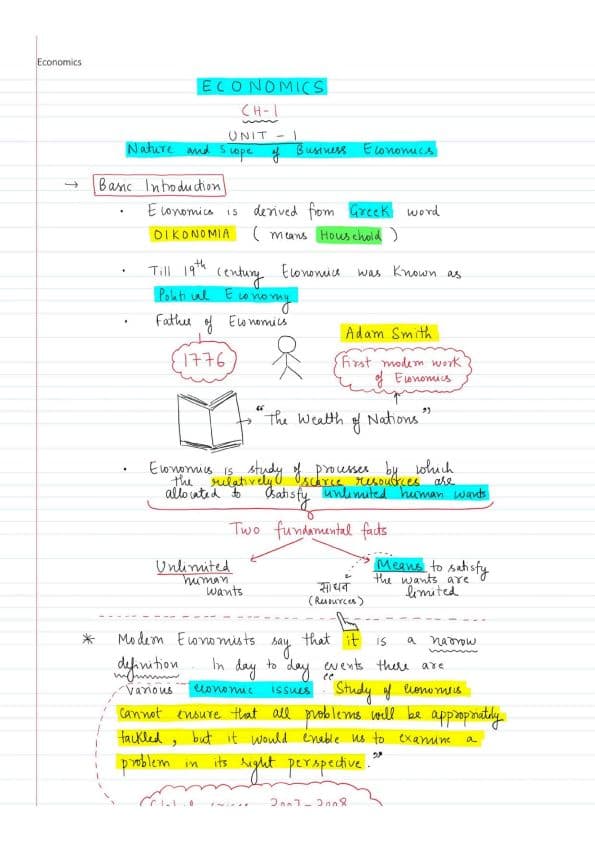
Full economics handwritten notes by CA Parag Gupta sir
Heet HingrajiyaLikes 209Views 68.6k Detailed Notes
CA Foundation · Business Economics
"Hi guys! Maine kuch naya try kiya Economics me — ek alag andaaz, ek alag soch. Chapter 1: Nature & Scope of Business Economics – Unit 1
مُحَمَّدLikes 126Views 14.7k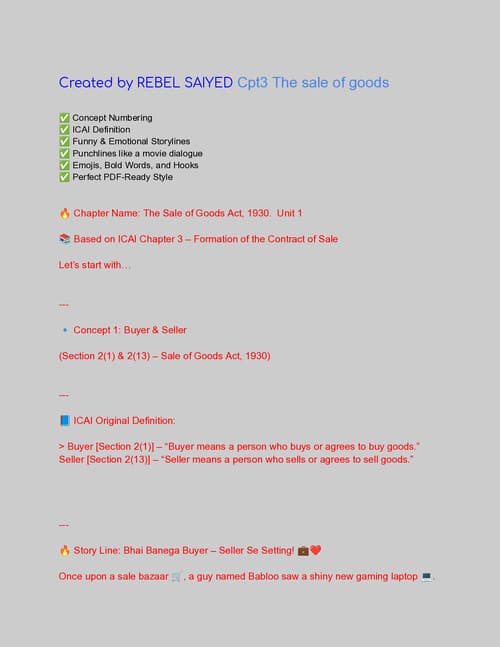 Charts
CA Foundation · Business Laws
Chpter 3 the sale of goods act Unit. 1 only. Full of story line Concept clarity and funny stories punch lines
مُحَمَّدLikes 118Views 14.2k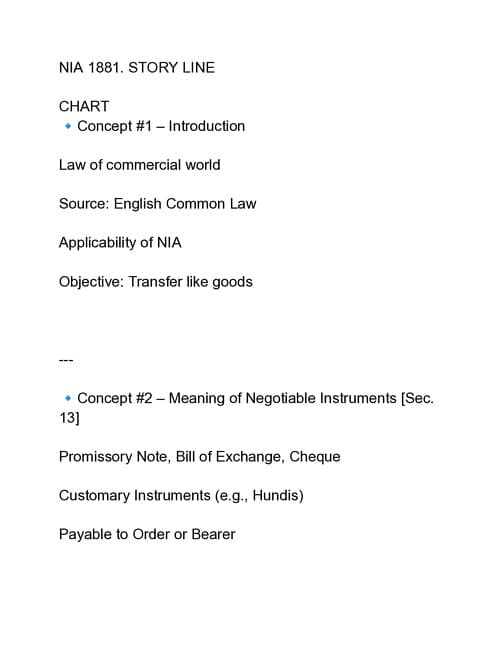 Amendments
CA Foundation · Business Laws
Nia 1881 story line pdf Coverage total 11 Concept
مُحَمَّدLikes 117Views 12.6k
Frequently asked questions
How should I study when my syllabus is incomplete?
Assess every subject honestly. Prioritise foundational topics, divide pending work into smaller tasks and reserve time for revision and question practice instead of focusing only on lectures.
Should I complete the syllabus before revision?
No. Revise completed topics while continuing pending chapters. Short reviews help retain earlier learning and reduce the amount left unfamiliar near the examination.
How do I choose which pending chapter to study first?
Consider syllabus relevance, links with other topics, difficulty, your understanding and time required. Use the official syllabus and avoid relying only on predicted-question lists.
What if I keep missing daily targets?
Check whether targets are realistic and tasks too large. Break them into smaller outcomes, add buffer time and adjust the weekly plan rather than repeatedly carrying tasks forward.
Should I stop mock tests until the syllabus is complete?
No. Chapter and sectional tests can be useful during coverage. Full-length mocks are more informative once you have studied enough to attempt a complete paper meaningfully.
How can I manage pending chapters and revision?
Divide time between new coverage and short revision blocks. Adjust the balance according to the examination date and progress, but do not leave all revision until the end.
Should I watch lectures faster to finish?
Use faster playback only if you can still understand the explanation. Do not sacrifice concept clarity or question practice just to record more completed lecture hours.
How should I track incomplete syllabus?
Use a subject-wise tracker with stages such as not started, in progress, completed, revised and tested. Update it based on what you can actually explain or solve.
What if topics remain pending in the final weeks?
Make a realistic priority list using the applicable syllabus and your preparation status. Balance essential coverage with revision and practice, avoiding last-minute resource switching.
How can Studycaller help with an incomplete syllabus?
Studycaller can complement a structured plan with relevant learning, revision and practice resources. Use them selectively while keeping time for revision and testing.