Best Way to Retain Theoretical Concepts During Exam Preparation
Explore best way to retain theoretical concepts during exam preparation with practical strategies, clear study routines, revision methods, question practice and…
In this article(12 sections)ShowHide
Theory subjects involve definitions, provisions, explanations, distinctions and detailed concepts. Students may understand a chapter while reading it but struggle to recall the important points when writing an answer. Reading needs to be supported by deliberate retrieval and practice.
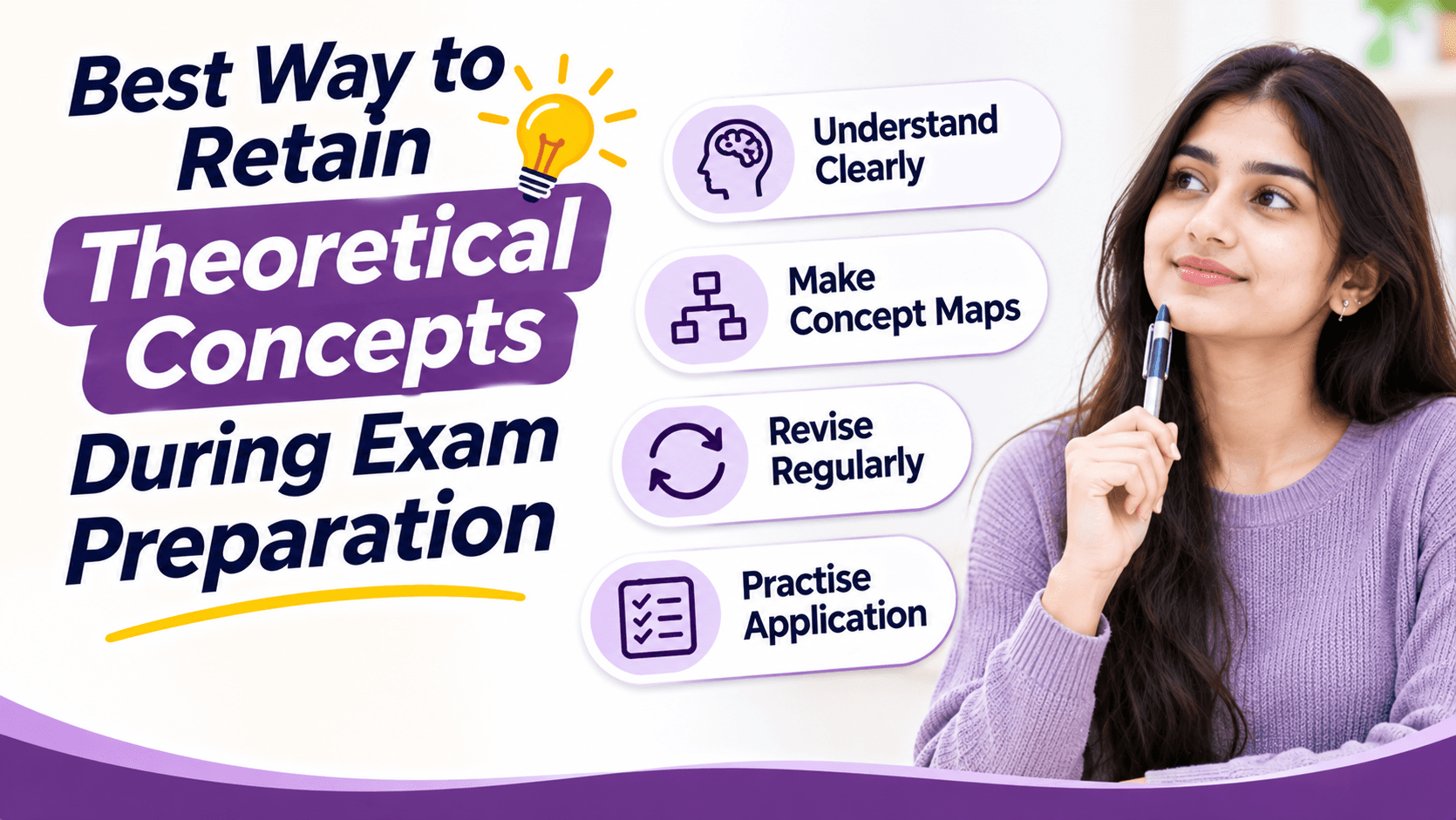
Retention improves when concepts are revisited, connected and used. A practical method combines understanding the meaning, recalling main points without notes and applying them through written questions.
Understand before memorising
Identify the purpose, key elements, conditions and exceptions of a concept. When you understand the logic, it becomes easier to remember the structure. Break difficult paragraphs into smaller ideas and explain them simply before learning technical wording.
Use active recall
Close the book and write down the main points you remember. Compare your recall with the source and fill gaps. This is more revealing than highlighting because it shows what you can retrieve without help.
Apply spaced repetition
Plan short reviews after first studying a topic, later in the week and during broader revision cycles. Give more frequent attention to concepts that repeatedly slip from memory.
Create comparisons and associations
Connect a new concept with a related provision, process or practical example. Use comparison tables for similar terms and flowcharts for processes. Keep visual aids simple and useful.
Prepare short notes
Record key terms, conditions, exceptions and distinctions rather than copying textbook paragraphs. Keep references for technical points and update notes when you identify an amendment or correction.
Write answers from memory
After revising a topic, attempt a question without notes. Organise points logically and address the exact requirement. Compare your answer with reliable material and practise missing points again after an interval.
Break large chapters into units
Divide a large chapter into definitions, conditions, procedures and examples. Set a clear target for each session and connect the units at the end with a one-page overview.
Use questions to strengthen retention
Mix direct questions with application-based questions so you learn to recognise a concept when wording changes. Include earlier chapters and revisit incorrect answers.
Avoid common memory mistakes
Trying to memorise every line at once can be slow. Focus first on meaning and structure, then learn exact wording where required. Do not mistake familiarity while reading for actual retention.
How Studycaller can support theory revision
Studycaller can complement theory preparation with study resources, concise revision support and practice. Use material to understand the topic, then test yourself independently rather than relying only on reading.
Quick Reference Table
| Focus area | Practical approach |
|---|---|
| Understand before memorising | Identify the purpose, key elements, conditions and exceptions of a concept. When you understand the logic, it becom... |
| Use active recall | Close the book and write down the main points you remember. Compare your recall with the source and fill gaps. This... |
| Apply spaced repetition | Plan short reviews after first studying a topic, later in the week and during broader revision cycles. Give more fr... |
| Create comparisons and associations | Connect a new concept with a related provision, process or practical example. Use comparison tables for similar ter... |
| Prepare short notes | Record key terms, conditions, exceptions and distinctions rather than copying textbook paragraphs. Keep references ... |
| Write answers from memory | After revising a topic, attempt a question without notes. Organise points logically and address the exact requireme... |
Conclusion
Strong exam preparation comes from a clear understanding of the syllabus, regular revision and deliberate question practice. Keep your approach aligned with current official examination information, and use Studycaller as one part of a wider learning routine. Review your progress honestly, correct recurring weaknesses and make the next study session more focused than the last.
Notes students love
Free notes from the Studycaller library, picked for this article.
 Amendments
CA Foundation · Business Economics
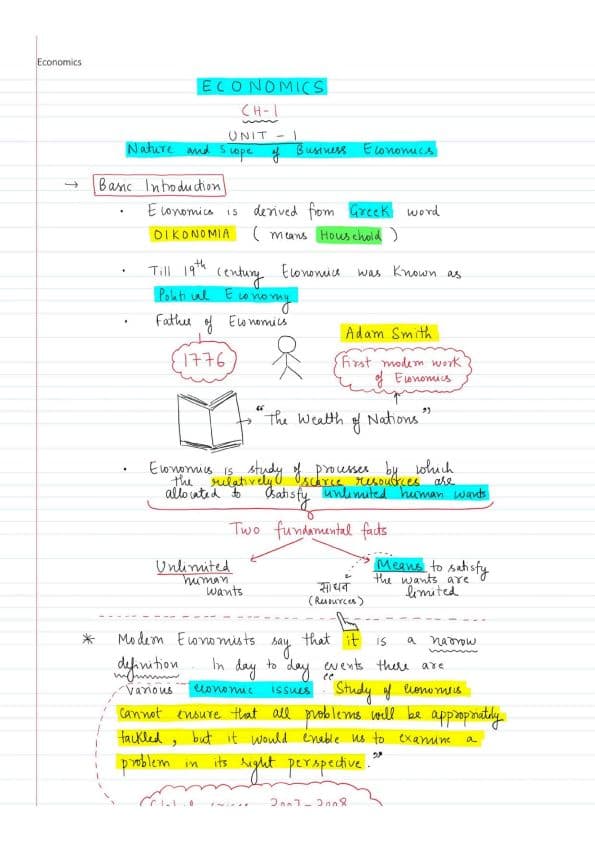
Full economics handwritten notes by CA Parag Gupta sir
Heet HingrajiyaLikes 209Views 68.6k Detailed Notes
CA Foundation · Business Economics
"Hi guys! Maine kuch naya try kiya Economics me — ek alag andaaz, ek alag soch. Chapter 1: Nature & Scope of Business Economics – Unit 1
مُحَمَّدLikes 126Views 14.7k Charts
CA Foundation · Business Laws
Chpter 3 the sale of goods act Unit. 1 only. Full of story line Concept clarity and funny stories punch lines
مُحَمَّدLikes 118Views 14.2k Amendments
CA Foundation · Business Laws
Nia 1881 story line pdf Coverage total 11 Concept
مُحَمَّدLikes 117Views 12.6k
Frequently asked questions
What is the best way to remember theory for exams?
Understand the concept first, then use active recall and spaced revision. Practise writing answers without notes and revisit points you forget.
Why do I forget concepts after studying?
Forgetting can happen when a topic is studied once without later retrieval. Planned recall, question practice and revision at intervals help strengthen memory.
Must I memorise textbook lines?
Exact wording may matter for certain definitions or statutory provisions, but every paragraph need not be memorised. Understand the meaning and retain accurate technical terms.
How often should I revise theory?
Revisit topics soon after learning them and schedule further reviews during the week and later cycles. Increase frequency for concepts you repeatedly forget.
Are short notes useful?
Yes, when concise and organised around key terms, conditions, exceptions and distinctions. They should prompt recall and support revision rather than replace prescribed material.
How can I remember similar provisions?
Prepare comparison tables showing meaning, purpose, conditions and differences. Test yourself by explaining when each concept applies.
Should I write theory answers during revision?
Yes. Writing from memory shows whether you can retrieve and organise information under examination conditions. Review missing points and practise again.
Can flowcharts help theory subjects?
Flowcharts can simplify processes, sequences and connected steps. Use them when they clarify relationships, but retain written explanations for detailed concepts.
How can I revise a large theory syllabus quickly?
Prioritise topics using syllabus coverage, difficulty and recall performance. Use concise notes, active recall and mixed questions while staying aligned with the applicable syllabus.
How can Studycaller help retain theory concepts?
Studycaller can support learning and revision with relevant resources and practice. Combine these with independent recall, written answers and spaced revision.