
Client Onboarding Process in CA Firms: Building Strong Client Relationships
Learn about the client onboarding process in CA firms, its importance, key steps, challenges, and how a structured onboarding system improves client satisfaction.
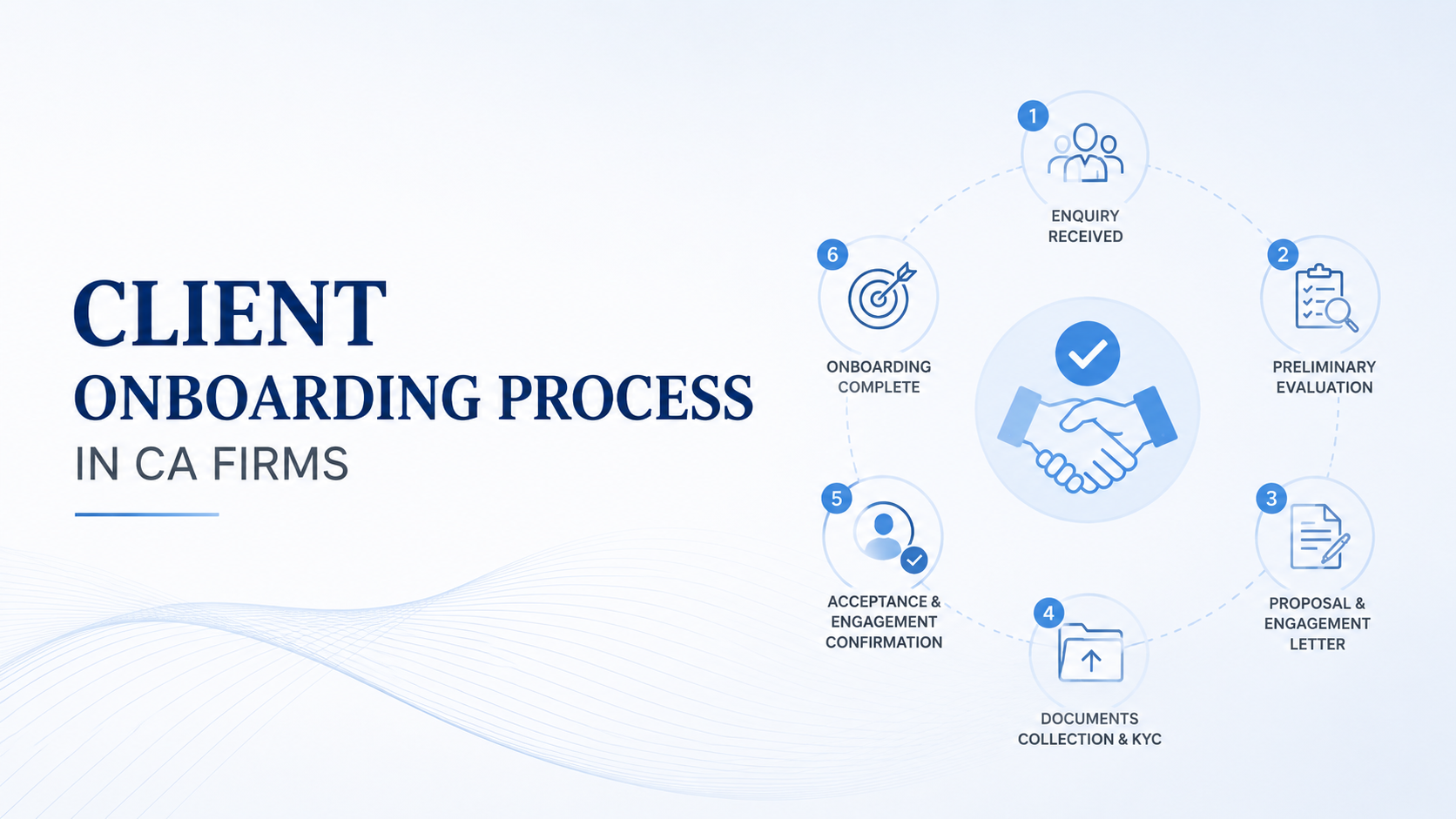
Table of Content
- Why Client Onboarding Matters
- Understanding Client Requirements
- Documentation Is a Critical Step
- Defining the Scope of Services
- Technology Is Improving Onboarding Processes
- Effective Communication Creates Better Experiences
- Onboarding Helps Improve Operational Efficiency
- Common Challenges During Client Onboarding
- The Future of Client Onboarding in CA Firms
- Conclusion
The relationship between a Chartered Accountant and a client begins long before the first tax return is filed or the first audit assignment is undertaken. The initial interactions set the foundation for trust, communication, and long-term collaboration. This is why the client onboarding process has become an essential part of modern CA practice.
Many firms focus heavily on acquiring new clients but pay less attention to what happens after a client agrees to engage their services. Without a structured onboarding process, misunderstandings can arise regarding expectations, timelines, responsibilities, and service scope. These issues can affect both client satisfaction and operational efficiency.
A well-designed onboarding process helps create a professional first impression while ensuring that both the firm and the client start the relationship with clarity and confidence.
Why Client Onboarding Matters
The onboarding stage is often the client's first real experience with a CA firm. It shapes how the client perceives the firm's professionalism, responsiveness, and organizational capabilities. An effective onboarding process helps:
- Establish clear expectations from the beginning.
- Collect necessary information and documentation efficiently.
- Reduce confusion regarding services and deliverables.
When clients understand the process and know what to expect, they are more likely to feel comfortable and confident in the relationship. For the firm, onboarding also reduces operational risks and creates a smoother workflow for future engagements.
Understanding Client Requirements
Every client has unique needs, goals, and challenges. A startup seeking fundraising support will have very different expectations from an established company looking for audit services. This is why one of the most important parts of onboarding involves understanding the client's business and objectives. During initial discussions, firms often gather information about:
- The nature of the client's business.
- Existing financial and compliance requirements.
- Future goals and challenges.
These conversations help professionals identify how they can provide the greatest value and tailor their services accordingly. A strong understanding of client requirements often leads to stronger long-term relationships.
Documentation Is a Critical Step
Proper documentation is an important component of client onboarding. Before services begin, firms generally need to collect various records and information to ensure compliance with professional and regulatory requirements. This may include:
- Identity and business-related documents.
- Registration certificates and statutory information.
- Financial records and previous compliance details.
Collecting these documents early helps prevent delays later in the engagement. It also allows the firm to verify information accurately and maintain proper records from the beginning of the relationship.
Defining the Scope of Services
Many client disputes arise because expectations were never clearly defined at the start. A structured onboarding process helps avoid this problem by clearly outlining:
- The services being provided.
- Responsibilities of both parties.
- Expected timelines and deliverables.
When clients understand exactly what is included in the engagement, misunderstandings become far less likely. Clear communication regarding scope also helps firms manage resources more effectively and maintain service quality. Transparency during this stage strengthens trust and professionalism.
Technology Is Improving Onboarding Processes
Modern CA firms are increasingly using technology to streamline client onboarding. Digital platforms allow firms to:
- Collect documents electronically.
- Share engagement information securely.
- Track onboarding progress in real time.
These systems reduce paperwork and make the process more convenient for clients. Technology also helps firms maintain organized records and improve internal coordination. As client expectations continue evolving, digital onboarding is becoming a valuable competitive advantage.
Effective Communication Creates Better Experiences
Onboarding is not only about collecting documents and completing formalities. It is also an opportunity to build relationships. Clients often have questions regarding timelines, compliance obligations, reporting requirements, and service processes.
Firms that communicate clearly during onboarding tend to create stronger first impressions. Regular updates, prompt responses, and transparent discussions help clients feel supported from the beginning. This positive experience often influences how clients view the firm throughout the relationship.
Onboarding Helps Improve Operational Efficiency
A structured onboarding process benefits the firm as much as the client. When information is collected systematically and responsibilities are documented properly, teams can begin assignments more efficiently. This reduces:
- Time spent searching for missing information.
- Delays caused by incomplete documentation.
- Miscommunication regarding client requirements.
As a result, work progresses more smoothly, and service delivery becomes more consistent. Well-organized onboarding often leads to better productivity across the firm.
Common Challenges During Client Onboarding
Despite its importance, onboarding is not always straightforward. Some common challenges include:
- Delays in receiving required documents.
- Incomplete or inaccurate information from clients.
- Misaligned expectations regarding services.
These issues can slow down engagements and create frustration for both parties. Successful firms address these challenges by maintaining clear communication and following structured onboarding procedures. The more organized the process, the easier it becomes to overcome these obstacles.
The Future of Client Onboarding in CA Firms
Client onboarding is expected to become increasingly digital in the coming years. Advancements in technology may allow firms to:
- Automate document collection and verification.
- Use digital signatures for faster approvals.
- Integrate onboarding directly with workflow management systems.
These improvements will help reduce administrative effort while enhancing the client experience. As competition increases, firms that provide smooth and efficient onboarding experiences are likely to gain a significant advantage.
Conclusion
The client onboarding process in CA firms plays a vital role in establishing successful professional relationships. It helps firms understand client requirements, collect necessary information, define service expectations, and create a positive first impression. A structured onboarding system improves operational efficiency, reduces misunderstandings, and enhances client satisfaction. As technology continues transforming professional services, effective onboarding is becoming an essential part of building a modern and client-focused CA practice.

FAQs
What is the client onboarding process in CA firms?
The client onboarding process is the structured procedure through which a CA firm collects client information, verifies documents, defines service expectations, and establishes the foundation for a professional relationship. It ensures that both parties understand their responsibilities from the beginning.
Why is client onboarding important for CA firms?
Client onboarding helps create clarity regarding services, timelines, and responsibilities. It reduces misunderstandings, improves communication, and ensures that all required information is collected before professional work begins, leading to a smoother client experience.
What information is typically collected during onboarding?
CA firms usually collect identity documents, business registration details, financial information, compliance records, and other relevant documents required to understand the client's business and fulfill professional obligations effectively.
How does onboarding improve client satisfaction?
A well-organized onboarding process creates a positive first impression, provides clarity regarding services, and ensures clients receive proper guidance. This helps build trust and confidence in the firm's professionalism from the start.
Why is defining the scope of services important during onboarding?
Clearly defining the scope helps clients understand what services will be provided, expected timelines, and responsibilities. This reduces the likelihood of disputes and ensures expectations remain aligned throughout the engagement.
Can technology improve the client onboarding process?
Yes, technology enables digital document collection, secure information sharing, electronic signatures, and progress tracking. These improvements make onboarding faster, more convenient, and more efficient for both clients and firms.
What challenges do CA firms face during onboarding?
Common challenges include delayed document submissions, incomplete information, communication gaps, and unrealistic client expectations. Structured processes help firms manage these challenges more effectively.
How does onboarding improve operational efficiency?
When client information is collected systematically and documented properly, teams can start assignments without delays. This reduces administrative effort and improves workflow management across the firm.
How long does a client onboarding process usually take?
The duration depends on the complexity of the engagement and the availability of required information. Simple engagements may be completed quickly, while larger assignments may require more detailed verification and documentation.
What is the future of client onboarding in CA firms?
The future is expected to involve greater automation, digital verification systems, integrated workflows, and paperless onboarding processes. These advancements will help firms improve efficiency while delivering a better client experience.