CA Preparation Consistency Strategies: How to Stay Disciplined Until Exam Day
Discover effective CA preparation consistency strategies to stay disciplined, avoid burnout, maintain motivation, and improve exam performance.
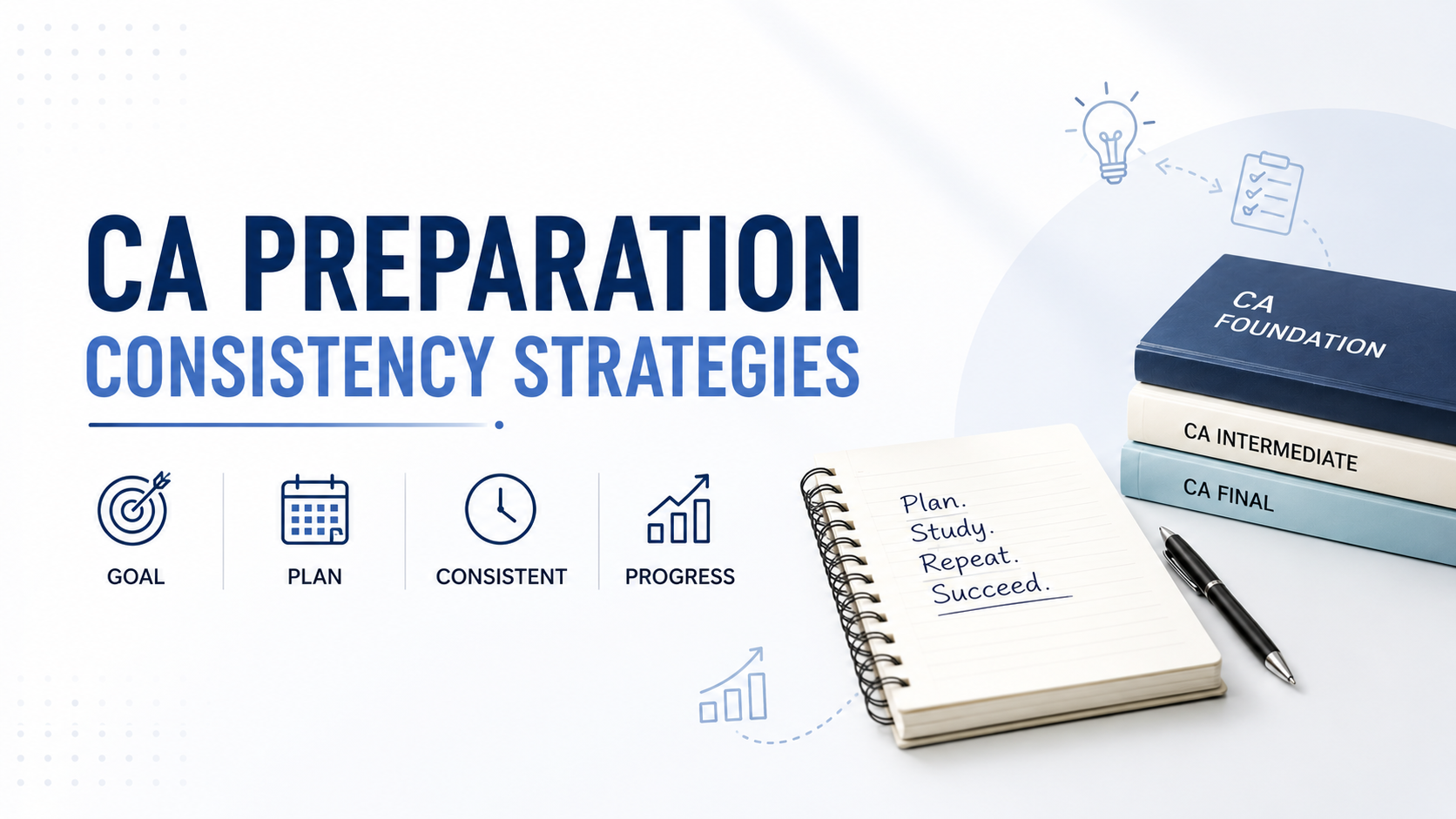
Table of Content
- Why Consistency Matters More Than Motivation
- The Real Problem Is Not Laziness
- Habits of Consistent CA Students
- Start with a Practical Study Schedule
- Build a Daily Minimum Target
- Focus on Systems Instead of Goals
- Why Small Wins Matter
- Avoid the All-or-Nothing Mindset
- Track Your Progress Visually
- Strategies That Improve Long-Term Consistency
- Revision Should Be Part of the Routine
- Learn to Manage Low-Motivation Days
- The Role of Mock Tests in Consistency
- Avoid Burnout During CA Preparation
- Why Comparing Yourself to Others Hurts Consistency
- Consistency During the Final Months Before Exams
- The Compound Effect of Consistency
- Conclusion
One of the biggest challenges faced by CA students is not understanding concepts or finding study material—it is maintaining consistency throughout the preparation journey. Most students begin their preparation with high levels of motivation and enthusiasm. They create ambitious study schedules, set daily targets, and imagine themselves clearing the examination with excellent marks. However, as weeks pass, distractions increase, energy levels fluctuate, and motivation starts fading. This often results in irregular study patterns that negatively impact preparation.
The truth is that success in CA exams is rarely determined by a student's performance on a single day. Instead, it is the result of hundreds of small study sessions completed consistently over several months. Students who study five productive hours every day for six months usually outperform those who study fifteen hours occasionally and then lose momentum. Consistency transforms average effort into extraordinary results. Therefore, learning how to remain consistent is one of the most valuable skills a CA student can develop.
Why Consistency Matters More Than Motivation
Many students believe they need to feel motivated every day to study effectively. Unfortunately, motivation is temporary. Some days you will feel energetic and productive, while other days you may not feel like studying at all.
Consistency, however, does not depend on emotions. It depends on habits and discipline. Students who build consistent study routines continue making progress regardless of how motivated they feel. Over time, this steady progress creates a significant advantage. A disciplined student often achieves better results than a highly motivated student who lacks consistency.
The Real Problem Is Not Laziness
Students often blame themselves for being lazy when they fail to follow their study plans. In reality, the issue is usually poor planning rather than laziness.
Unrealistic targets such as studying twelve hours every day can quickly lead to frustration and burnout. When students fail to achieve these expectations, they lose confidence and become inconsistent. A better approach is to create a study routine that is challenging but sustainable over the long term.
Habits of Consistent CA Students
- They focus on daily progress rather than perfection.
- They study even when motivation is low.
- They follow realistic schedules.
- They prioritize revision regularly.
- They track their progress consistently.
These habits help maintain momentum throughout the preparation period.
Start with a Practical Study Schedule
One of the most effective consistency strategies is creating a realistic timetable. Many students design schedules that look impressive on paper but are impossible to follow in practice. Instead of planning every minute of the day, focus on creating a flexible routine that fits your lifestyle and commitments.
For example, a student pursuing articleship may not be able to study for ten hours daily. However, consistently studying three to four focused hours every day can produce excellent results over time.
Build a Daily Minimum Target
A powerful consistency strategy is setting a minimum daily target.
- Complete one chapter summary.
- Solve ten practical questions.
- Revise one topic.
- Study for two focused hours.
- Attempt one mock test question.
Even on difficult days, achieving a minimum target keeps the study habit alive and prevents long breaks from preparation.
Focus on Systems Instead of Goals
Most students concentrate only on their final goal of clearing the examination. While goals are important, systems are what produce results. For example:
- Goal: Clear CA Intermediate.
- System: Study four hours daily, revise weekly, and attempt monthly mock tests.
Students who focus on following effective systems are usually more consistent because they pay attention to daily actions rather than distant outcomes.
Why Small Wins Matter
Consistency becomes easier when students experience regular progress. Completing a chapter, improving mock test scores, finishing a revision cycle, or understanding a difficult concept creates a sense of achievement. These small wins build confidence and encourage continued effort.
- Improve motivation
- Increase confidence
- Reduce procrastination
- Build momentum
- Strengthen study habits
Celebrating progress helps students stay engaged throughout their preparation journey.
Avoid the All-or-Nothing Mindset
One of the biggest threats to consistency is perfectionism. Many students believe that if they miss one study session, the entire day is ruined. As a result, they often lose momentum and skip several more days.
A smarter approach is to accept occasional setbacks and return to the study routine immediately. Missing one day is not a problem. Giving up for a week is. Consistency is about returning to the plan quickly whenever interruptions occur.
Track Your Progress Visually
Monitoring progress helps students remain accountable and motivated. Simple tracking methods include:
- Study calendars
- Habit trackers
- Revision checklists
- Mock test records
- Chapter completion sheets
Seeing visible progress encourages students to continue working toward their goals.
Strategies That Improve Long-Term Consistency
- Create a Dedicated Study Environment: A distraction-free environment improves concentration and reduces the temptation to procrastinate.
- Study at Fixed Times: Studying at the same time each day helps create automatic habits.
- Reduce Decision Fatigue: Planning study sessions in advance eliminates the need to decide what to study every day.
- Take Planned Breaks: Short breaks improve focus and reduce mental fatigue.
These strategies make consistency easier to maintain over long periods.
Revision Should Be Part of the Routine
Many students postpone revision until the final months before exams. This often leads to stress and poor retention. A better approach is to integrate revision into the weekly schedule.
- Weekly revision sessions
- Monthly subject reviews
- Formula revision sheets
- Short notes preparation
- Revision-based mock tests
Regular revision improves memory and strengthens confidence.
Learn to Manage Low-Motivation Days
Every CA student experiences days when studying feels difficult. The difference between successful students and unsuccessful students is how they respond during these periods. Instead of waiting for motivation to return, focus on completing smaller tasks.
Examples include:
- Revising notes
- Watching concept videos
- Solving a few MCQs
- Reviewing formulas
Small actions maintain momentum and prevent complete inactivity.
The Role of Mock Tests in Consistency
Mock tests do more than assess preparation levels. They also create accountability and structure. Students who schedule regular mock tests tend to remain more focused because they always have an upcoming deadline.
- Maintain study discipline
- Encourage revision
- Identify weak areas
- Improve confidence
- Track improvement
Mock tests act as checkpoints throughout the preparation journey.
Avoid Burnout During CA Preparation
Consistency does not mean studying continuously without rest. Overworking often leads to mental exhaustion, reduced productivity, and loss of motivation. Students should prioritize:
- Adequate sleep
- Healthy meals
- Physical activity
- Short breaks
- Stress management
A healthy routine supports long-term consistency and better performance.
Why Comparing Yourself to Others Hurts Consistency
Many students lose confidence when they compare their preparation with friends or social media posts. Someone else's study hours, revision speed, or mock test score does not determine your success.
- Compare yourself to your previous performance.
- Measure improvement over time.
- Track your own targets.
- Ignore unnecessary competition.
Personal growth is a much stronger motivator than comparison.
Consistency During the Final Months Before Exams
As exams approach, students often become anxious and attempt to change their entire study strategy. This usually creates unnecessary stress. The final phase should focus on:
- Strengthening existing knowledge
- Revising regularly
- Solving mock papers
- Improving weak areas
- Maintaining a balanced routine
Students who remain consistent until exam day are usually better prepared than those who rely on last-minute efforts.
The Compound Effect of Consistency
The greatest benefit of consistency is that its results accumulate over time. Studying a few hours every day may not seem significant initially, but the impact becomes enormous after several months. A student who studies consistently:
- Completes more revisions
- Solves more questions
- Retains concepts better
- Feels more confident
- Performs better in examinations
Consistency transforms ordinary preparation into extraordinary results.
Conclusion
The answer to successful CA preparation lies not in studying the longest hours but in maintaining consistent effort over time. Effective CA preparation consistency strategies include realistic planning, daily study habits, regular revision, progress tracking, mock test practice, and healthy routines. Students who focus on discipline rather than motivation are more likely to stay on track throughout their preparation journey. By building sustainable habits and avoiding the all-or-nothing mindset, CA aspirants can improve their productivity, reduce stress, and significantly increase their chances of exam success.

FAQs
Why is consistency important in CA preparation?
Consistency helps students retain concepts, complete revisions, build confidence, and make steady progress throughout the preparation period.
How can I stay consistent while preparing for CA exams?
Create a realistic study schedule, set daily targets, track progress, revise regularly, and focus on discipline rather than motivation.
What is the biggest mistake students make regarding consistency?
Many students depend on motivation instead of building habits, which leads to irregular study patterns and inconsistent preparation.
How many hours should I study consistently for CA exams?
The number of hours varies, but consistent, focused study is more important than occasional long study sessions.
Can small daily targets improve consistency?
Yes. Small achievable targets help maintain momentum and reduce the chances of procrastination or burnout.
How do mock tests support consistent preparation?
Mock tests create accountability, encourage revision, identify weaknesses, and help students maintain a structured study routine.
What should I do on days when I feel unmotivated?
Focus on smaller tasks such as revision, formula review, or solving a few questions instead of skipping studies completely.
Does tracking progress improve consistency?
Yes. Visual progress trackers help students stay accountable, motivated, and aware of their preparation status.
How can I avoid burnout during CA preparation?
Maintain a balanced routine with proper sleep, healthy eating, regular breaks, and manageable study targets
What is the most effective consistency strategy for CA students?
The most effective strategy is building sustainable daily study habits that can be followed consistently over several months.