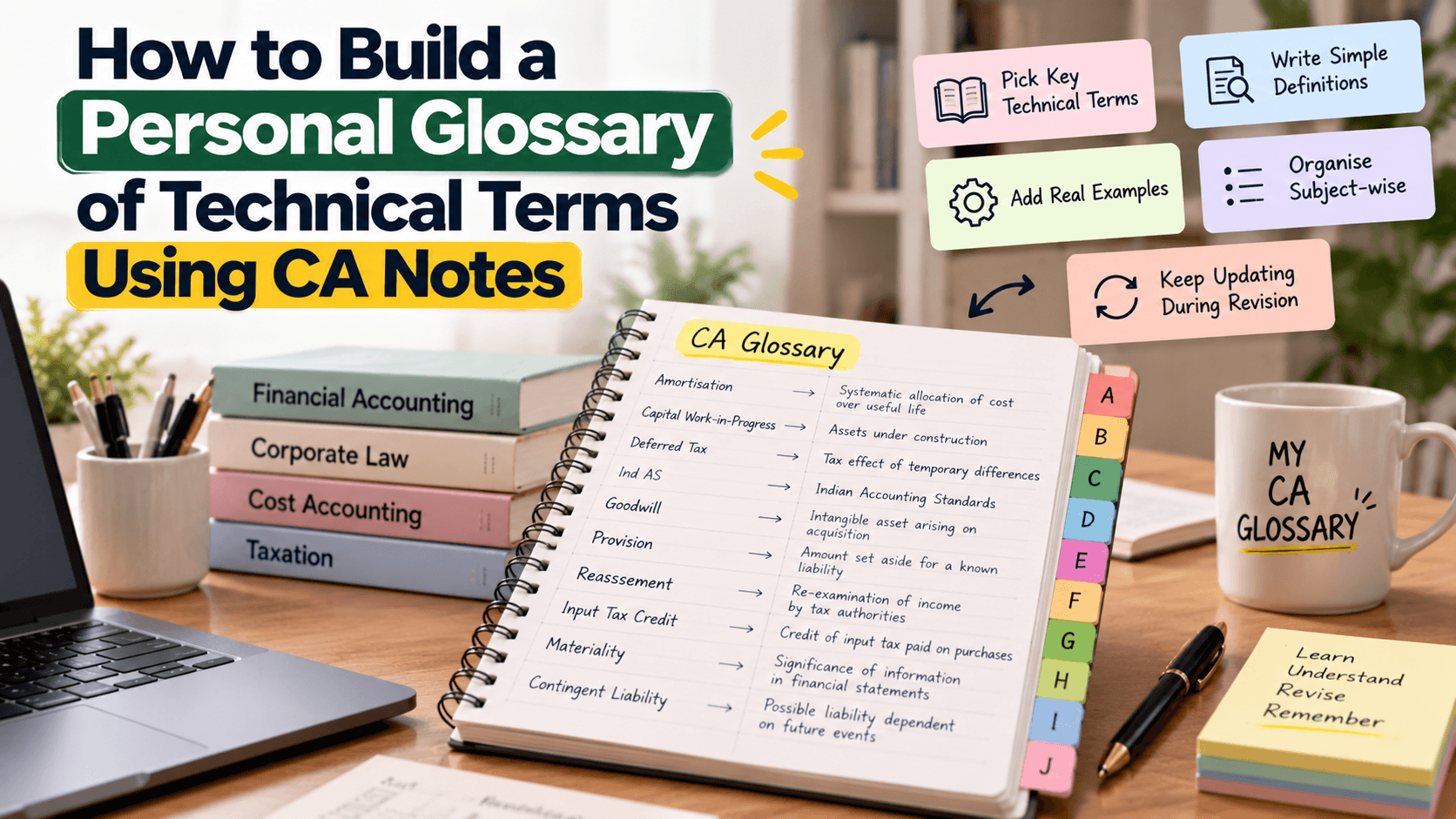
How to Build a Personal Glossary of Technical Terms Using CA Notes
Discover a practical way to collect, define and revise technical CA terms using concise explanations, examples, cross-references and regular updates.
In this article(10 sections)ShowHide
CA study material contains technical terms that may look similar but carry different meanings in accounting, auditing, law, taxation and finance. Forgetting a definition or mixing up related terms can affect understanding and answer quality. A personal glossary turns these terms into a quick revision resource when definitions are concise, accurate and linked to their chapters.
Why a Personal Glossary Helps
A glossary saves you from repeatedly searching through chapters for a term's meaning. It also helps distinguish everyday words from terms with a specific technical meaning. Revisiting definitions regularly can improve recall and make written answers more precise.
Collect Terms While Studying
Whenever you meet an unfamiliar term, a definition that is easy to confuse or a word that appears repeatedly in questions, add it to a running list. Record the subject and chapter so you can return to the original explanation.
A Useful Glossary Format
| Field | What to record |
|---|---|
| Term | Exact technical term and spelling |
| Meaning | Concise explanation in your own words |
| Context | Subject and chapter |
| Example | Short illustration where useful |
| Related terms | Similar terms and key differences |
| Source | Page, module or official reference |
Write Definitions That Are Short but Accurate
Use simple language, but do not remove conditions that change a term's technical meaning. Keep exact statutory or standard wording where essential. You can write a short explanation first and add a separate note for qualifications or exceptions.
Distinguish Similar Terms
Place confusing terms side by side and write the main difference in one sentence. Check the relevant ICAI material or applicable standard instead of relying only on memory.
Add Examples Only When Helpful
A short example can make an abstract term easier to remember. Choose examples that illustrate the concept without creating a new technical rule. Verify examples that depend on a particular law or reporting requirement.
Organise for Fast Search
Choose a maintainable format: alphabetical order, subject-wise pages, a spreadsheet or a digital document with headings. Subject-wise organisation helps chapter revision; an alphabetical index or search function makes individual terms easier to find.
Review With Active Recall
Read a term, cover its meaning and explain it aloud or write it from memory. Check the original definition and correct missing conditions. Also read a definition and recall the technical term.
Update When Material Changes
When a syllabus, standard or statutory position changes, check the official announcement and update the entry. Keep the source and date checked for terms that depend on a specific rule.
Studycaller and Glossary-Based Revision
When a practice question exposes confusion between two terms, add a comparison or example to your glossary. Studycaller can be part of a wider preparation routine, while official ICAI material remains the reference for definitions and syllabus applicability.
Audit notes
Free notes from the Studycaller library, picked for this article.
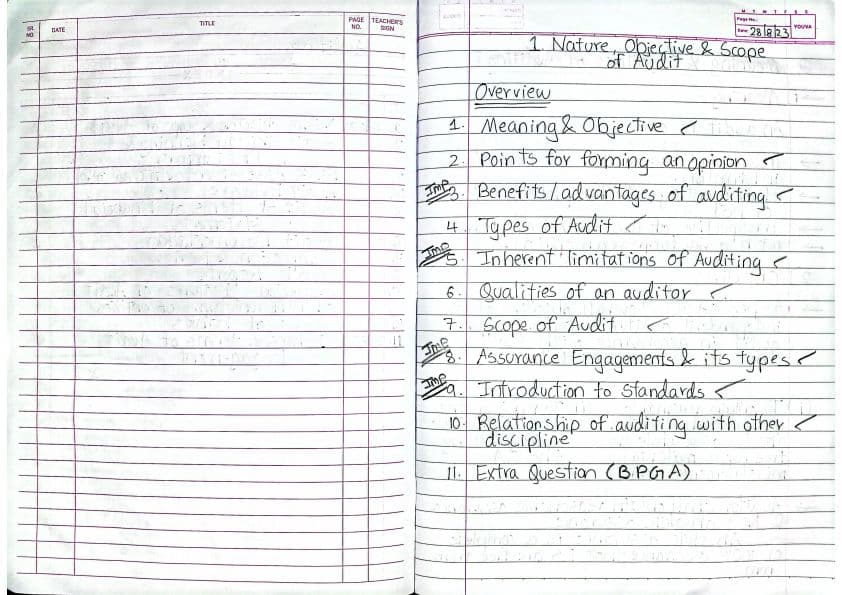 Handwritten
CA Inter · Auditing and Ethics
Audit Full Notes May 2024
Naman chaplotLikes 43Views 21.8k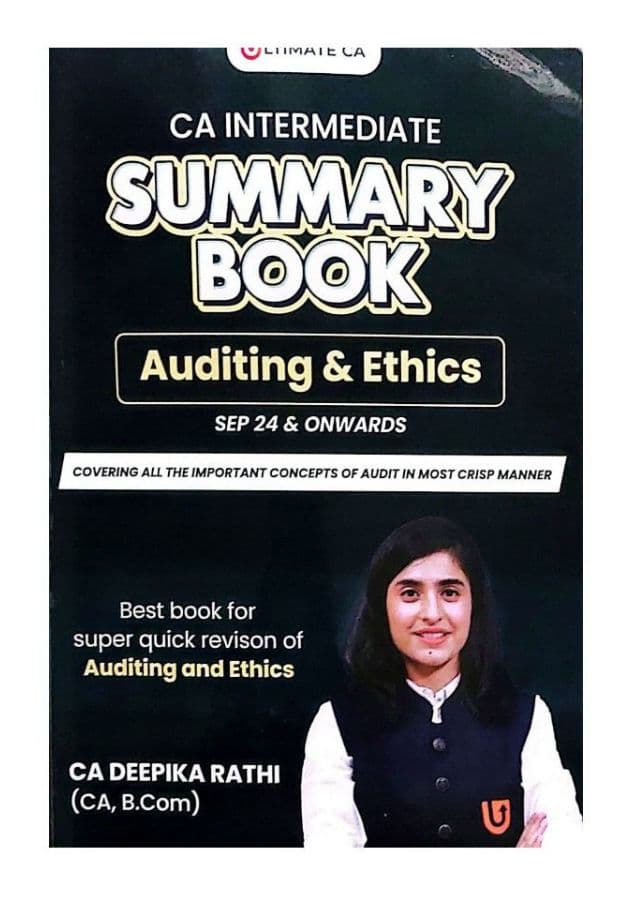 Charts
CA Inter · Auditing and Ethics
CA INTERMEDIATE AUDITING AND ETHICS CONCEPT BOOK BY CA DEEPIKA RATHI For September/January 24/25
Aadesh KumarLikes 34Views 22.7k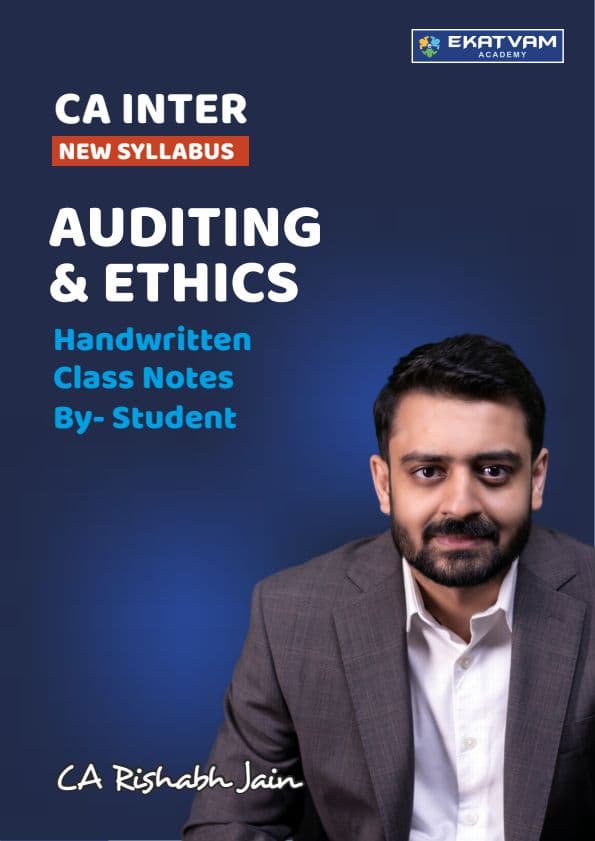 Handwritten
CA Inter · Auditing and Ethics
Audit - Handwritten Notes By Rishabh Jain Sir !
Sujal TurakhiyaLikes 27Views 17.6k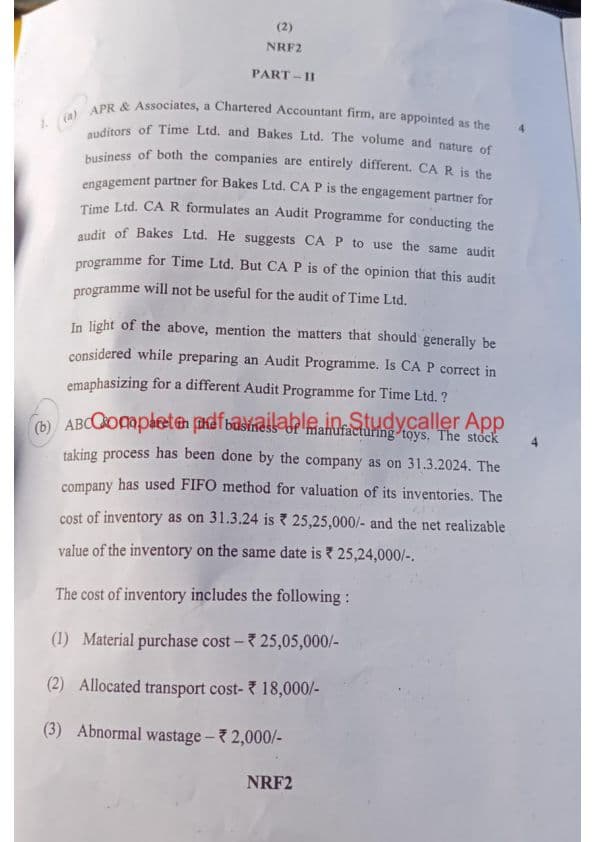 Amendments
CA Inter · Auditing and Ethics
CA INTER AUDITING & ETHICS QUESTIONS PAPER MAY 24
Mahi❤️Likes 27Views 14.5k
Frequently asked questions
What is a personal glossary for CA students?
It is a collection of technical terms with concise meanings, subject references and examples.
When should I start building it?
Start while studying each chapter. Add unfamiliar terms and definitions that are easy to confuse.
Should I copy definitions word for word?
Use your own words for understanding, but preserve exact technical wording wherever precision is required.
How long should a definition be?
One or two clear sentences are usually enough if they retain essential meaning and conditions.
How should I organise the glossary?
Choose a consistent system. Subject-wise organisation supports chapter revision, while alphabetical or digital search helps locate terms.
How do I remember technical terms?
Use active recall, then check your answer. Practise both term-to-meaning and meaning-to-term recall.
Should every term have an example?
No. Add examples when they make a difficult or abstract term clearer.
How can I distinguish similar terms?
Compare them side by side and verify the difference using official material.
How often should I update the glossary?
Update it after learning terms, reviewing mistakes or finding a relevant official update.
Can a glossary replace full notes?
No. Use it alongside detailed notes, official study material and practice questions.